Matt Jaworski:
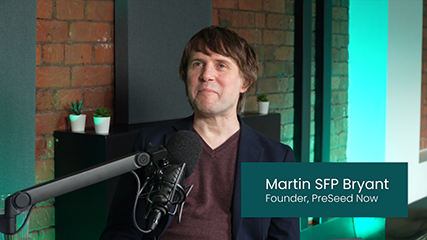
Hello and welcome to the latest episode of Scaling Green Tech. Today we're joined by Martin SFP Bryant, the founder of the PreSeed Now website and newsletter where he covers the most exciting. Pre-seed, startups and innovators in the B2B deep tech and climate tech space alongside investors helping connect the two sides to create the most amazing pre-seed and early stage startup deals.
Martin's background includes, careers in media broadcasting, and, recently he's been involved as startup and communications trainer coach, helping communicate ideas with impact and in ways that allow founders to raise money.
Martin SFP Bryant:
Hello. Good to be here.
PreSeed Now and how Bryant selects startups to profile
Matt Jaworski:
So to kick off, let's start with our typical question, which is, how would you explain PreSeed Now and what you do to a 5-year-old?
Martin SFP Bryant:
Okay. Well, my kids are just a little bit older than that now, but it's close enough that I can actually kinda remember how I might do this. So, okay then scamp, PreSeed Now is what I do, where I tell people about really interesting new things that people are doing, that people have never done before. There we go.
Matt Jaworski:
Amazing. Simple, clear. It's clear that you practised it quite a few times until they've got it right. So now what would be the longer pitch, maybe your elevator pitch that you would give to adults?
Martin SFP Bryant:
Well, I certainly wouldn't call them scamp.
Matt Jaworski:
Okay, all right scamp!
Martin SFP Bryant:
Yeah, I certainly wouldn't call 'em Scamp.
I value my teeth. I don't want to get punched. So I would describe PreSeed Now as a newsletter, focused on really early stage UK startups, deep tech and B2B startups, anywhere from inception to raising seed, for an audience of investors, founders, and people who work with startups.
And, yeah, we do deep dive profiles on these startups, when they're at this very early stage. So we've covered people like ElevenLabs, which is a huge company now. But when we covered them, ChatGPT hadn't even come out. So the idea of generative AI was quite novel. So that was really interesting to see them kind of accelerate so quickly.
And then we also look at all sorts of things that are happening around the PreSeed ecosystem, interviewing investors, talking about some topics that are interesting. So we've got a. Piece coming up soon about startups using generative AI coding tools and, and how that's working for them, how investors feel about it.
And we did one last year, which got a lot of interest around how to treat America. Now America's changing so much, but nobody really seems to want to talk about that and everyone seems to say, ‘ oh, scale into America’. Well, how do you do that in a world where America might be a bit more hostile to that?
So it’s interesting. Lots to dive into.
Matt Jaworski:
Amazing. And I mean, you touched on so many things already now that could be their own, full blown episodes. But to maybe ease us in before we get into topics like America, how would you say you go about choosing and shortlisting the startups that you will showcase and interview?
Martin SFP Bryant:
So it's a mixture really. So I've been a tech journalist for 16 years, getting on for 17 years now. And I've always really enjoyed interviewing. Really early stage startups and being the first to cover interesting companies. Most of them don't turn out to, you know, go anywhere, but they, even if they don't, they have really interesting stories.
The founders are interesting. They're trying something new. It might not be, you know, the right thing that they're working on, but they're working on something worth exploring and documenting, I think. And so, it's a mixture really. So obviously I've got connections through the years. People will get in touch and say, oh, you could try, you should get in touch with these people or founders.
I wrote about. 15 years ago, we'll get in touch and say, do you want to come to my new thing? So that's always really interesting seeing what they do next. And, then also, accelerators will get in touch. I'll do outreach to people to say, do you know any good startups? So it's networking generally.
Sometimes it's called pitches as well. So I always like to receive cold pitches from startups as well.
Matt Jaworski:
Well, that's all nice, right, but it sounds like, I'm guessing, right, you are in a position similar to many investors where everyone at this stage would like to be on your website. Like everyone would like to get an investment, but you somehow need to shortlist the most, promising ones.
I mean, even the other month when we first met. You mentioned that you were. Even in the middle of an interview with a startup, when you just realise that, hold on, they're actually a reseller. Right?
Martin SFP Bryant:
Yeah.
Matt Jaworski:
So not a good fit, not the kind of innovators that you want to provide a platform for and build a reach for.
Martin SFP Bryant:
Yeah.
Matt Jaworski:
So how do you go about, you know, deciding which of those many opportunities that will come should get showcased on PreSeed Now and are worthy of your attention as a Journalist?
Martin SFP Bryant:
In the end it's, are they worth the reader's time? Respect the reader. Respecting the audience is what I always go for.
And so will the audience think this is a startup worth covering? I actually had to cancel an edition recently because I needed more information from the startup. I was writing it, I'd interviewed them. I thought I had everything I needed. As I was writing, I was like, I'm gonna have to pause this and ask them for more information.
And we're not gonna have to publish this interview yet because, there's a hole here. It doesn't all quite connect in my head and I'm a bit worried about this. And so part of it is experience. So having spoken to thousands and thousands of startups, you get to have a good idea of which are the ones that actually have, you know, something about them.
And sometimes it's the founder. It could just be the founders, really, really. Strong. They, clearly, are credible. They tell a good story, which, you know, some people might not sound that important, but at an early stage where you might not have a full business yet, having a strong story and a strong direction and a vision for where you're going is really, really important.
So they have to have that. Typically speaking as well, they'll have done something, towards actually building this thing. Sometimes it's literally that they’re PhD candidates or they've got a PhD. They've done lots of research and they've started turning that into a startup. The fact they've done that research is a good starting point.
Sometimes it might be they've already built a first version of this product and they might even have it out on the market, or they're just about to go to market on it and they can demonstrate it to me. The people. I don't go for the people who are like, oh, we've got this idea, and we’re just looking for an investor to cover it, an investor to back it. We just want somebody to come in and give us some money so we can make it these days. You don't need to do that. There are AI coding tools that can help you build a first version of something to at least test whether this is going to be any good. And, yeah, investors are a bit more picky than they used to be as well.
Certainly, at that very early stage, a lot of investors will look for something a bit more than an idea. Definitely.
Matt Jaworski:
Again, so many, so many different themes. Right.
What would you say the investors would be interested in?
What pre-seed investors look for in founders and companies
Martin SFP Bryant:
It depends on the investor. So you have some investors who are kind of dedicated pre-seed investors.
They probably see loads of startups. They invest in this early stage. Their whole model is around investing in the right founder at that really early stage in time, and they're really focused on the founder. And the idea, they know there's not gonna be much there. They just know there's potential and they know if they back enough of these companies, some of them will come through and return their fund and it will all work out.
Then you have other investors, and these tend to be maybe your family offices, angel investors who are maybe a bit more cautious and they don't have that kind of venture, institutional venture model, that they're. They're basing their investments on and they want a bit more confidence that there's something here.
And maybe they're, maybe they haven't seen as many startups and they can't, they don't have that feel for it. And know what to back. And so a lot of the time those will look for, are you already making money? So have you proved you can make money? So sometimes, there will be startups that will need that.
It really depends on the kind of startup as well. If you're a deep tech startup, you're spun out of a university, you are based on research and you are trying something completely new with, you know, removing carbon from the atmosphere or whatever it might be, something, your newest approach to that or whatever it might be, you.
Are very unlikely to be at a commercially viable stage when you are pre-seed. But then if you are just launching a platform to help connect group A with group B and take a cut in the middle, it might be an original idea. But the actual, the platform idea, if it's the concept you're building on , is pretty much proven.
In which case you shouldn't have much problem starting to make some money from that before you start to look for investors.
Matt Jaworski:
Fair enough. Yeah. So then taking us back to what you mentioned about the story, right? Something that you're looking for, something that investors are looking for. Also at this stage, what distinguishes good stories or at least stories well told from those who don't make it .
For your, an investor selection.
Martin SFP Bryant:
So. If you are looking for VC investment, you need to understand the VC business model. You need to understand what investors want. You need to understand that they want to invest in a bunch of companies, and then they expect most of them to fail, but they want one or two or three to go really stratospheric, and one of them just needs to return the fund plus X amount and they're happy, and the people who invested in their fund are happy. And so you need to understand that they're looking for those companies that are going to be huge. And the best founders who can raise money at any stage really, but certainly at PreSeed Now, when there's not a lot to go on, understand that they need to show that down the line they are going to be one of those companies, or at least it's credible that they could become one of those companies and showing that you understand. A rough path of how to get there showing that you have the drive to do it. I was talking to an investor recently who told me that, one of the founders he'd invested in recently, he just knew the second he met him, that he was going to invest in him just because of the way he approached the conversation and, the, the way he thought about his own business. And that's so, so important. So, being able to recognise where investors want you to go and thus the kind of business you need to make and tell a credible story of how you're gonna get there. That's compelling and exciting and interesting as well. You need to. Be able to bring people along the journey. So not, not being, you know, sometimes I, I talk to startups and they're like, well, you know, I've got this cool idea, but you know, I really just wanted to sell it. I want to sell it as quickly as possible. Maybe, you know, for a million pounds, and then just retire.
Like, fine. There's nothing wrong with that. That's a perfectly valid thing to do. Nothing, nobody's saying it's not a good thing to do, but you probably don't want to go down the venture route because as soon as they're. Pre-seed investors who are looking for you then do another round and another round and another round, and drive up the value of your business.
They are not going to be interested in that because they want those massive unicorn, decacorn exits.
Matt Jaworski:
Yeah. Retiring with one million out of a startup doesn't sound like another ElevenLabs that they all want.
Martin SFP Bryant:
Right.
Matt Jaworski:
Doesn't even sound like a chance at another ElevenLabs, which is what they want at this stage.
Martin SFP Bryant:
Yes, exactly.
Matt Jaworski:
We start at the pre-seed stage, right? But then the companies go further. And for all those years you covered many companies.
What separates those that continue growing after successful? Maybe seeds raised from those don't make it much further.
Execution speed and adaptability after raising investment
Martin SFP Bryant:
I think there are a few things.
I mean, part of it is the things I've already mentioned. Those things kind of set you up for that journey. But then bringing the right people on board to help execute that vision. So it's okay knowing what you need to do, but actually being able to convince the right people to join your team, and the right trust, the right people, and create the right atmosphere within the company, where you can enable and, and empower the right.
People to push you forward in the right way, is, is, is really, really important. And not thinking, oh, I've raised X amount of money. I am the big founder now and I'm going to strut around all the big conferences saying how important I am and that'll help me raise money. It's actually at that point, you actually have to get down and just get on with executing and, and moving forward and, and, really, you know.
Just, just delivering really. And so it really is as simple as that. The ones that go forward are the ones that use their money wisely. That investor I was talking about, who knew the founder was someone who was going to invest in straight away. He said, the moment, the day they wired them, the money, they, they put job ads up.
Like, they just knew, you know, they wanted to execute immediately.
Matt Jaworski:
Oh, so it was kind of, they were like, okay, everything is ready now we have the fuel, the car is starting, rather than like , yeah, we're throwing a party, we're taking a two week long holiday, and then we're starting to think about the job ads or something like this.
Martin SFP Bryant:
Exactly. Yes. Yes. And, and so it is that mindset and that, that. And adaptability as well. Knowing that it's not going to go to plan. Everything's not going to go exactly to plan. Something will change. You know, so many startups have to change their business model. During COVID, for example, you know, you can't tell what's going to happen.
So you might have to, you might find that your business model is banned for sale or, you know, regulated comments.
Matt Jaworski:
Yeah. You have a startup that's doing some solution for events and no events for the next year.
Martin SFP Bryant:
Yes, exactly. Exactly. So, so, so suddenly you have to adapt completely. And, we've, I, I've spoken to so many startups, that what they're doing now was a result of them having to pivot during COVID.
They had an idea, they were execute on it and suddenly, oh, this is not going to work. And crisis powered. Imagination and changing course. It doesn't always work. Of course, there are plenty of COVID era startups that are no longer with us because people assumed the world was going to go a certain way.
Yeah. Based on what was happening then. And it didn't turn out like that, did it? Yeah. Because, we did actually all go back to events, or many of us did. And so, yeah, some of those, oh, the world's changed forever now. Assumptions didn't pan out.
Matt Jaworski:
Yeah. I mean it's this kind of idea, right? That opportunity is the flip side of the coin that has a crisis on the other side.
Martin SFP Bryant:
Yes, exactly. Crisis-unity as, as Homer Simpson would call it.
Matt Jaworski:
Also I feel like the right startup is doing a pitch that fails or telling a story that is not clear or maybe not fully well told. At one point, it's also not a game over, right? It's a process. It's a long journey marathon, not a sprint.
I remember you told me a story of an investor who I think approached you saying that after you covered the company, they actually reengaged with it. . They invested in it, but initially they actually rejected it because, just the pitch didn't communicate the value. Didn't communicate the story.
So if you were to give your top five tips for better, more impactful, startup stories, what would these be? To also synthesise things that we touched on maybe before.
The micro-pitch and communicating startup value
Martin SFP Bryant:
So I don’t know if I could, give a precise top five necessarily! One thing I always say is important is to have a strong micro-pitch.
So this is a one or two sentence description of what it is you do, and who you do it for, and, why you do it in a compelling way. And, boiling that down from a huge description of what you do to that, that that little, you know, concise to one or two sentence description, you can then deliver.
When you are being interviewed on a podcast or you are speaking to an investor or, you know a sales call or whatever it might be, it's always there. Or a recruitment, you know, you're recruiting someone you've just met in you, you've just met someone over dinner and you go, oh, you'd be brilliant for working for my company and explaining to them why they should come to work for you and you can just really, say stuff off the top of your head.
Having that is so, so important and that's really knowing. What the outside perception and, what the outside perception of the value of your company should be. And the, you know, the offer of your company should be, a lot of the time I see founders who get really bogged down in, the detail of what they're doing because they are so.
Obsessed with their problem, which is a good thing. You know, it's a good thing to be obsessed with your problem. It's a good thing to be deep in your product and to understand, you know, why you're building it and how, how you're building it. But to an outsider, if you start talking like an insider would, they're not going to get involved.
They're not gonna get, get, get engaged with it. I think, you know, a lot of investors are generalists, and they will have areas of particular interest and, and, particular specialism, but. A lot of the time, the, the necessity of their funders, they have to learn a bit like I do really for my, for my job.
I, I have to learn a lot about the startups as I go and learn about the industries that they're in. And so start, investors will need to do that. VC firms will need to do a good deep dive in the area in, and the, the more you can handhold them through the process and explain why it is that you should, that they should invest in you, the better, you know.
Think about the big picture. What's the big impact you can make on the world? It's not about, I mean, sure you can make lots of money. That's obviously an important thing if you're looking for an investor. And sure you can sell a product and it might be a new product, but what's the big impact you can make on the world?
How can you engage people in what you are doing and make it seem like it's just the thing they must get behind. I remember when Stripe first started, you know, a massive company. Now, you know, it seems everyone uses it for the payments pretty much. But, when they started, in Ireland and they, they started with this, single line pitching, it was something like, ‘take payments on your website with a single line of code’.
And just the simplicity of that just makes sense. And you can extrapolate from that, where that goes, whether you're an investor, whether you are just a, you know, you're just a journalist or whoever you are, you can instantly go like, oh yeah, I can, I can see where that goes. And that was such a simple, beautiful little line.
Matt Jaworski: ,
It sounds so easy that everyone will be using it. You know, if it's so simple. Everyone will be using it in a couple of years and here we are. Right?
Martin SFP Bryant:
Yeah. So, so yeah. I don't know if I could give just a, a, a, a set of tips, but I will just say it's about thinking about the big picture and how others see you and communicating that in a compelling way.
Matt Jaworski:
I guess what you described in the context of investors doing research into different industries right before they decide to invest in them. So let's say quantum or let's say anything with AI and machine learning, right? I need to do research to understand them. Then as a founder, especially at an early stage, you need to do research to understand your target market, target audience, and in this case, it's not gonna be just customers, it'll be also investors.
So. You need to understand what concepts they have in their head that you can use to actually explain what you do in a way that will resonate and they will get it and they'll like, and they'll engage.
Martin SFP Bryant:
Yeah. Yeah. And I think that a lot of the time the startups that raise the most and are raised from the best people are just, you know, they, they've got founders who are good at raising. It really is as simple as that. It really is. Sim as good as, as simple as that. You can have a good company, but if you're terrible at raising, you're terrible at, at engaging with investors, you're terrible at, at telling a story around what you're doing.
They're not going to be confident that you are the right business to invest in. I’ve seen many founders over the years who have been very bitter about this. I've got this amazing business. Why will no one invest in it? I'm making money. I'm, maybe it's 'cause you walk around like you've got a chip on your shoulder.
You know, like, you need to be someone that people feel they can work with and partner with.
Matt Jaworski:
Yeah. It brings me to another thought, idea and question for you. So I was reading your website, and in there you were covering, I think it was maybe even today, this morning, a company that aims to help people in the film industry with production and get those kinds of traction that normally requires a lot of contacts, relationships, building.
And even described your story as a 22-year-old graduate of, I think, broadcasting studies. Right?
Martin SFP Bryant:
Yeah.
Matt Jaworski:
You were shy and, if I may, withdrawn, right?
Martin SFP Bryant:
Yeah.
Introverted founders and building complementary teams
Matt Jaworski:
And this kind of relationship building wasn't what you wanted to do, what you felt comfortable doing. Now, I'm guessing, obviously with your journalistic career, you eventually develop those skills.
So what advice would you give to those founders who will often have technical backgrounds, STEM backgrounds, that often have those connotations or associations with being an introvert. Someone may be focused very much on their area, but not necessarily that excited about meeting people that energised by meeting people.
What advice would you give to them so that they can develop the skills that they need for success in a relationship- driven world?
Martin SFP Bryant:
Yeah, I mean, it's a difficult one, isn't it? Because you do, you do need to be outgoing or you do at need, at least need to have someone on your team who is like that.
So sometimes it's a case of having, of bringing in the person. So a lot of deep tech companies that come out of universities, they will say, let's just give them, their lead researcher, the CEO role. It's not a good idea. Often it's not sometimes. Sometimes it works out great. It's not always. Sometimes they're a deeply technical person who is a brilliant scientist, a brilliant researcher. They've come up with something amazing, but their talent is in that. Their talent is not going out and doing this, you know, the fundraising, the engagement, the sales work that you need. Like, you know, Stece Wozniak needed Steve Jobs. Steve Jobs was not a technologist. He was a sales guy.
You know, he was like one of the greatest sales guys ever. He could, you know, he, he could, he could sell you a pencil and call it like a, you know, the, a great work of genius or something, but like, they, they needed the two of them in those early days of Apple because, Steve Wozniak was the guy who was building these computers and Steve Jobs was the one who was selling them.
So you sometimes need to just know your strengths. Some people, I think, can develop those skills and can develop, and that's the case of just going out there and, and, and just breaking through your comfort zone and, and, and, and doing that. And I think for me it was just a case of. It took me a while. It took me most of my twenties actually, to get to that point, because I spent most of my twenties, doing a job that I thought was, it was fun, but it wasn't really, you know, it wasn't really anything I wanted to do as a career and couldn't break out of it.
And then I started reading tech blogs, and I thought I could do that. And I, I, I wrote a few pieces like I'm, I'm as good as those people on there. I could do that. So then I started reaching out and, and, and, and, and got a job. And so I broke through my comfort zone and then said yes to appearing on a stage interviewing a founder in Ukraine.
I had to fly to Kyiv to interview this guy on stage, in 2010. And, yeah, it was all go from there. The thing it took for me to realise that was that everyone's just making it up as they go along. Nobody is, you know, even like the most, who's the person who seems the most confident in the world is actually probably, unless they're a, a, a sociopath or something, it is actually like, they've got all their insecurities in their head.
And so you can push through that and you can, you can influence the world and, and make a difference in the world. So sometimes I think it's just a case of that clicking in your head, but for other people it's knowing your strengths. Are you a great Scientist, a great developer, a great in that course you probably, you might need to meet the person who can then be that front for that company.
And sometimes, sometimes it's being honest and realising that.
Matt Jaworski:
Absolutely. It's like a team with compatible skill sets, right? That's what allows the startup magic to happen. And then also, well, allows the business to actually function because as you said, when one person is going on stages and shaking hands, someone has to be,
in the lab or workshop. Right. Creating the actual technology, because it's very difficult to do both at the same time.
Martin SFP Bryant:
Yeah, exactly. Yeah.
Balancing scientific rigour with commercial storytelling
Matt Jaworski:
Something that leads on quite, naturally, especially in the context of many founders having scientific academic backgrounds, which taught them a specific precision and rigour of expression and making claims, how to balance communicating excitement about potential impact of a solution of a technology with, without overclaiming it and over promising.
Hype cycles and credibility in quantum technology
Martin SFP Bryant:
So this is a big issue in the quantum technology world, particularly where, over the years it's a field that has developed obviously in university labs and there's a lot of very strong scientific rigour.
And then the people have broken out of that to, to form, quantum computing companies and things. And, a lot of hype has built up over the years around that. Often driven by, for example, people wanting to, you know, we've built this company, we've got to sell something. We've got, we've got to, tell people that the, you know, the, the big, impact is just around the corner.
And then people got disillusioned. Maybe some people got disillusioned with that. But, I think now we're getting to the point where there are some real world impacts you can make. That, that, that. Quantum computing, quantum sensing, quantum communications are starting to be made, that are worth talking about.
And so, it is quite interesting to see how that world is starting to mature in that way. And, a lot of what some people would've called empty hype and exaggeration in some of the early days of that field, starting to give way to something a bit more solid now. So I think you have to think about what.
Impact you can reasonably
make and where that could go? I think the minute you start. Overselling it, you're going to lose people. And it is difficult. It's a delicate dance. It's a delicate dance because obviously you have to talk up the technology. You have to say, this is going to be a huge thing.
Matt Jaworski:
You have to show the ambition that you want to beat, another ElevenLabs.
Martin SFP Bryant:
Yes, exactly. Exactly. You need to show that you can change the world in some way. But, yeah, getting there, it, it's a, it is a delicate dance, but in the end, you, you have to be credible. You, you, and you, you should know what's credible.
If you, if you're an expert in your field, you should know. What is credible? It's just not holding back as well be because, I think a lot of the time, scientists particularly will be like, you know, we've, we've proven this, but we haven't proven this, and so we don't know if we can go there, so we can't say this scientifically.
So at that point, you, you, I think talk to a communications expert, get somebody on your team who's a, who's an expert in this stuff because it is, it's a delicate dance, but, yeah. I don't really have a, there's no magic answer for this. It's, it's a case of, do you have something to prove today?
If not, how can you credibly tell the story of where you're going to go? And you need to be comfortable with how you're going to do that. But yeah, it's difficult. And, what's good to see is these days there are an increasing number of expert consultancies, focused on deep tech companies.
So. The specific needs of these companies that have really complex, technologies that they're working on and how to tell those stories in a clear way. So yeah. Yeah. It's an interesting field that's evolving quite rapidly.
Matt Jaworski:
Oh yeah, no, absolutely. Like we get lots of that in Green Tech and Climate Tech.
So for example, where we help our clients communicate their sustainability impact, but also their broader value propositions that go always beyond just sustainability and impact. Yeah. In ways that showcase their potential without, over promising or any kind of greenwashing or impact washing. Yeah.
Reframing climate tech messaging around economic value
Martin SFP Bryant:
Yeah. I think with climate related companies, one of the problems is that a lot of the time the companies want to talk about the environmental impact.. Which is, is very, very important. But in a world where, in the US they're rolling back environmental regulations and things and you've got China, which doesn't seem to care, and India and whatever else is going on, and , et cetera.you're trying to sell things that a big chunk of the world seems to care less about you than maybe you do. You have to think about the other thing, the economic impact, the way you can save companies money, help them deal with regulation, but also help them, make more money in, in a way that they can be proud of
That's that you've got to think about. The impact beyond, beyond climate. Sad, really. Because I think protecting the planet should be a pretty fundamental thing for all of us. But sadly, we live in a world where that's not necessarily always the case.
Matt Jaworski:
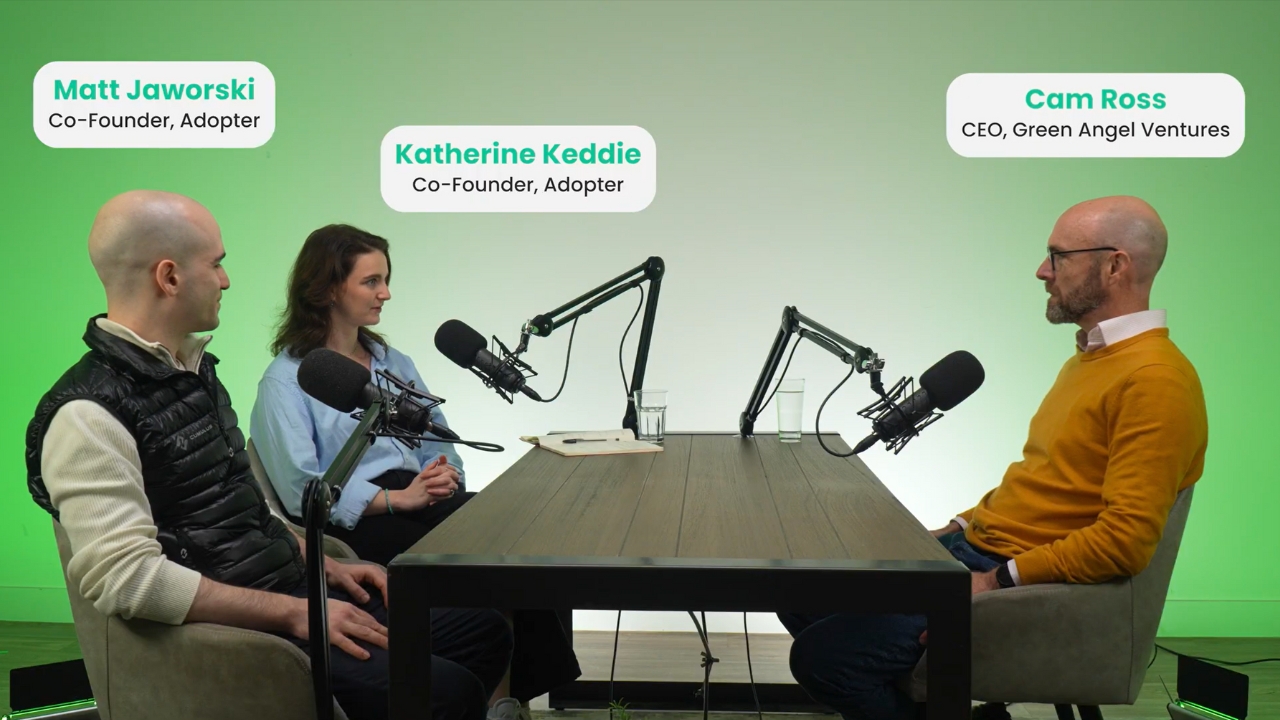
Yeah. And it has to go together with, driving some kind of shareholder value for someone and monetary returns or saving. I mean, literally last week, we had a recording session with Cam Ross, the CEO of Green Angel Ventures, where we talked about the same challenge, really, and this episode might or might not be live at the time ours goes live.
And there is an example we speak of quite often with, my co-host, Kat. And that is a company who, for example, came to us founded by a brilliant team, brilliant scientists. They showed us their tech and it listed five, sort of, USPS that they have, for their particular solution. And the number one was sustainability, benefit savings, considerable savings, because a very resource intensive part of an industrial process is not needed.
That was actually number five. Well, right now, especially in 2026, right? This should be number one. Because then you say, tell people, hey, we are going to save you a lot of money. We'll help you make even more money. And that's not an exaggeration. And then you'll also be able to help the environment, help the planet, and make the world a better place.
But that's not necessarily what is going to be the main pull of them towards you. Moreover, now, as you mentioned in the context, for example in the United States, often if you lead with impact, people think that you don't actually have anything else to offer. Yes. So that's when those, specialised, consultancies and need for this advice, comes in.
Yeah. And sometimes it is also the case that the most beneficial way to a startup to position it, to frame it will not necessarily be through the impact and sustainability lens. It'll be, again, through this core value to the client, the saving, the increase of revenue of some point, and then the.
The sustainability element will be something that goes somewhere there is woven between the lines, but cannot be emphasised because it'll be actually a turnoff in many industries. Especially the conservative ones.
Martin SFP Bryant:
Yes, exactly.
Quantum computing and sensing applications for green tech
Matt Jaworski:
Now, and sort of going back to something you mentioned about quantum, I also know that it's one of your, personal favourite areas.
What would you say are the opportunities for broad green tech, innovation in the quantum space? I know you interviewed, for example, founders of the, forecasting of the improved quantum database, forecasting, tool. So what was this one about and what are other opportunities for climate and green tech companies in the quantum space?
Martin SFP Bryant:
Yeah. So that startup was Cronon, who went through the Conception X programme and they are using quantum algorithms which can run on classical computers, so normal computers, or also, quantum computers, to get more detailed, long range weather forecasts.
And this is something we're seeing a lot of now, is, companies using quantum algorithms, either with or without a quantum computer to start to use AI in, predictive ways to understand, you know, predictive maintenance, for example, predicting the weather, in more detailed ways than it's possible otherwise.
And that's really interesting to see, especially in a technology field, which is often seen as kind of, you know, quite a long way away. Yeah. These impacts are starting to be, to be felt now. So I think, in the climate and green space, certainly quantum computing has potential for predictive, like I say, you know, understanding lots of data and, and predicting patterns, et cetera.
Quantum sensing, there's potential there. I mean, I would leave it to the, to, to, to the entrepreneurs to find the ways of doing it, but. Quantum sensing has all sorts of interesting ways of detecting really precise changes in the environment, without, you know, in ways that just aren't possible at the moment.
And, we're starting to see these sensors being developed for things like health, for things like, navigation, as an alternative to, to GPS, for example, or to, to supplement GPS. When GPS fails, we're seeing a lot of, down, you know, the eastern border of Europe, near Russia, a lot of GPS jamming going on.
So, that's a high priority for a lot of militaries: is this research into quantum sensing. So, yeah, I think we'll probably see the climate and green space. That, quantum sensing and indeed, quantum computing being used in interesting ways in the future. Definitely.
Matt Jaworski:
Okay. So for example, with quantum sensing, I'm imagining it could be some kind of detection of, pollution or maybe detection of, resources that, then can be extracted, in a much more sustainable way than conventional ways that would require digging up for a big patch of land to get to them.
Martin SFP Bryant:
Potentially. Yes.. I mean, I'm not a quantum scientist.
Matt Jaworski:
Well, we're hearing like, you know, a bit of sci-fi speculation.
Martin SFP Bryant:
Yeah.
Matt Jaworski:
I'm trying to also bring the idea of quantum sensing, right? It might be abstract to many of our listeners. A bit closer to their point of reference.
Martin SFP Bryant:
Yes, certainly. I think those are the kinds of things that we might see. Yes. I have not seen that myself. But, certainly sounds like the kind of thing that could be done yet.
Matt Jaworski:
Yeah. Sounds like the kind of application that someone at some point will be able to develop.
Martin SFP Bryant:
Yes.
Matt Jaworski:
Even if it's not something that is quite there just yet.
Martin SFP Bryant:
Exactly, yes.
How founders should approach journalists and media
Matt Jaworski:
Okay, so now let's bring us back a bit to where we started. So. You held different roles and were on the side of the journalist, on the side of the person interacting with journalists.
How would you say the founders should approach their contact with the media, their contact with journalists overall?
Martin SFP Bryant:
So it depends what you want to get out of it. I think there, there, there's a certain kind of founder who wants attention and wants to be in the media and. They've raised their, they've raised the small, the smallest amount of money possible. And the first thing they do is they get a PR agency. Not always the best idea, usually not the best idea.
But you have to think about what you want to get out of it. And so sometimes it might be your raising your profile before you've raised some money. That can be quite difficult for a lot of startups because journalists want to report on something you've done. And in most cases, it. In most cases, sadly, it won't actually be the product or the technology unless it's massively, you know, controversial or there's a strong consumer interest.
Often these are things where if you are lucky, they might be interested in the technology. Normally they're going to be wanting to cover your funding round. As a news hook to cover your technology and what you're doing. They want, they want something to hang that technology on, like a story, a leap forward for you. That is the reason and often it is funding. So unfortunately the tech media landscape has shrunk quite a bit. If you go back. For 10-15 years, there was a lot of VC money being put into online publishing. VCs had this idea that you could build these massive scale businesses and they'd sell loads of advertising.
And you just had to invest in quality journalism and quality media to do that. And so you saw companies like BuzzFeed rise up and then decline, sadly. And, the, but, but BuzzFeed, you know, it, it's much maligned, but it created some great journalism in its time. When it was paying really good journalists to work for them.
So the tech media landscape has really declined a lot. Some of the teams they used to be at, some of the big publishing companies have really shrunk. And so you have a lot of individual journalists working on their own things, you know, pre-seed. Now, you know, I've been a tech journalist for nearly 17 years and PreSeed Now is my main outlet.
Now I'll sometimes do some freelance stuff, but that's the main way I get my journalistic side of things out there. So, there's less opportunity for just getting out there and getting coverage. And so I think the first thing you should do is really think about if you don't have that, you know, we've just raised the funding round, let's engage the press.
A lot of the time it's making yourself interesting enough that a journalist wants to come to you. So having. A good sense of how to tell your own story through things like LinkedIn, maybe, maybe through other social media channels as well. But linked LinkedIn definitely is a great one, to get out there and start telling your story through.
It's certain people would want to do it through it. But a lot of people are kind of put off x these days for very good reasons, even though there's still a lot of technologists on there. But, but yeah, how can you tell your story yourself? It is often a good place to start. And then you become somebody that, maybe the media will want to go to.
A lot of the time when I'm approached for things, when I'm approached for. You know, appearing on a TV show or a radio programme or something to talk about something. They've seen me do something else. So they've seen me on LinkedIn or, you know, I, I posted a thing, recently about wanting to, about my brain when I'm being interviewed or when I'm.
Interviewing someone else. And how when the on air light goes on, my brain switches into broadcast mode, which is very different to how I think normally. It's a bit more focused, it's a bit more, I don't know! I can make connections between ideas quicker, in a very focused way. And I don't know where that comes from, but it's there.
And so I was talking about that and then somebody who hadn't spoken to me for a while read it and got in touch and said, oh yeah, you'd be great for this series we're doing of events, and we'd love you to host them. So it's putting yourself out there and making those connections and being someone that the media wants to come to.
And I wouldn't waste, I say waste, loads of PR companies will look at me and go, it's not wasting money. And often it's, often, you know, if you, if you deploy pr. Well, it is not a waste of money. But a lot of the time, if you're a really early stage startup, I'd say you probably don't need to do that yet.
Wait until, you know, you may be at seed stage, or Series A, depending on the company and, and what you want to achieve, before you really spend serious money on any pr. But just getting out there and. Putting yourself out there and learning how to tell your own story in your own way, in a credible, authentic way.
That's the same for anyone, isn't it? These days if you, you know, getting out there on, on TikTok or Instagram or whatever and being authentic. That's what everyone seems to want these days. And, you know, it, it, it, it can work if you genuinely are authentic with it. So, so get out there, tell your own story.
The media will come to you. If they want you. If not, just get on with what you're doing because, eventually you will do something that is so great that they're all beating down your door to talk about it and then just come to them when you have a compelling leap forward. And at the moment it is for early stage companies, it's probably when you are raising money.
Matt Jaworski:
Yeah. I mean, absolutely. And something we've seen with clients and founders in this space is that often something as simple as showing their journey and activity somewhere like LinkedIn, allows them to build a profile, gain recognition that leads to media actually reaching to them. Exactly.
Something that we often help founders with because they're busy, they need some help with, but many are also able to do it themselves. And, that can lead to some amazing results.
Martin SFP Bryant:
Exactly.
Common mistakes startups make when engaging the press
Matt Jaworski:
So now, just following the media threat a tiny bit more. When founders approach journalists, media, public platforms or approach PreSeed Now, what mistakes do they make?
Martin SFP Bryant:
Oh, there are plenty out there. Plenty, plenty of mistakes. It's, oh, so many. So I, I have a. Presentation. I have a PowerPoint presentation about this that I've given to lots of startups over the years, and I update it every now and then, because there are so many mistakes that are made.
A, a big one is assuming. Your inherent newsworthiness simply because you exist. A lot of people are, you know, a lot of the founders are very much in their, you know, they're in their, in their, in their head. They're, they're the, the star of their world. They are, you know, they are the most important person because they're pushing the startup forward.
And that's right. You know, you, you need a bit of that mindset. Absolutely. But you have to. When you're going to, a journalist understands that they're not necessarily going to write about you just 'cause of that. So. It's, it's, it's, there's a, a certain, there's a lot to be said for not being arrogant.
There's a lot to be said for not pestering the journalist. So, there's lots of creepy behaviour that goes on towards, towards journalists. So there certainly has been over the years. What does it actually mean? For example, I had a founder get in touch and they'd read up all my social media posts.
And so they, this one's actually in the, the. Presentation I mentioned. It's, it, it, it was something like, I hope that cold, you had the other weeks cleared up and it was like, that's just a really weird thing for someone you've never spoken to, to say, and it, it just says, I've been stalking you and I want to try and engage you.
So honestly, I think generally speaking, if you've got something. You've got a story you think the journalist will want to hear, it's as simple as, if it's cold outreach, if you've never met them before, just find their email address, email them. Simply explain, I've got this story. Here's a very brief description of it.
Let me know if you're interested. Understand that some, some journalists are simply so overwhelmed by stories every day. They cannot necessarily get back to you. If you think they are absolutely somebody who should be covering it then, and it's the kind of thing they've covered in the past, and they, they, they look like they should be interested in it and you've read enough of their work that you're pretty confident they'll be interested in it follow up a few days later, not.
The next hour or something, that does happen as well. You know, people, you know, phoning you up saying, I emailed you half an hour ago about this story. Can you, can you, can you get back to me please? 'cause I really need to know. It's like, yeah, you need to know, but I'm busy writing this. I'm on a deadline.
I need to do this. Stop pestering me. I'm now less likely to write about it because you've been pestering me. And so I just think I filed you under annoying. Yeah. In my head. Which might seem unfair, but then if there, if you've got 10 stories to cover that day potentially, and you can only do. Two or three or whatever it might be, then you are going to have to make those decisions sometimes.
Yeah. And and, and yeah, you have to understand if you do get a journalist interested, you do have to understand that. The ball really is in their court. It's their story about you. You are not there to
dictate exactly what they write. And so some startups ask with pre-seed, now can we see the article before it goes out?
And the reason that I say no, I mean it's a traditional journalistic, tenet, you know, a basic of journalism that if you're writing about someone, you've written up an interview, you don't say: ‘oh, can they have a read first to check you're okay with it’. Because then it's, it's closer to PR really, isn't it?
It's closer to marketing, because you've let them say, ‘oh, I don't like that bit’, or whatever. You've given them a chance to do that. And even if they didn't, like, I have people who come to me and say, oh, will you, will you let me have a look? I don't want to change anything. I just wanted to make sure it's all accurate, which sounds perfectly innocent and it is.
And they don't mean any harm when they say it. But if I do that, then. I am writing for them. When I'm writing the draft, I'm writing for them subconsciously in my head 'cause I know they're going to read it. And so the way I write is gonna be closer to their marketing language than closer to my true voice.
And my true voice is actually what the newsletter's about rather than about all their marketing. And so yeah, it, it, it's respecting the fact that the journalist is going to write about you in their own way, if there's anything they've written when they publish that is factually incorrect, you are well within your rights to ask them to change it.
And if they're good journalists, they will change it. Don't threaten to sue them. This actually happened, oh, not, not to me, but to a journalist I know. And I was working with, where he got something slightly incorrect. It was an honest mistake. It wasn't meant to be, it wasn't meant maliciously.
Yeah. It was just a very slight mistake. It wasn't even that important as I remember. It wasn't a world chain. It didn't accuse them of something or anything. It was fine. It was just like, they'll be launching on Monday rather than Tuesday, or they'll be launching in this area first, or that area.
You know, it was like a small detail that could easily be corrected if you just said. Completely corrected. And, they instead emailed and said, we will be suing you if you don't. We've instructed our lawyers. In fact, it was a letter from a lawyer. It was a letter from a lawyer saying, I'm acting on behalf of this company unless you change it.
We are going to sue. And like, I'm there. And I was responsible, I think I was, was I the editor at the time? I can't remember. And I was like, I I, I'm not doing anything until I've spoken to a lawyer now. 'cause I'm, I'm now, you know, frozen and I, I'm referring to my management. Yeah. And that then took, and that was on a Friday afternoon.
Matt Jaworski:
And the mistake and the mistake keeps being alive.
Martin SFP Bryant:
Yeah. And it was on a Friday afternoon. And so getting anything back about it was gonna have to wait till Monday. And so there was nothing that could be done about it all weekend. And the mistake was live all weekend. And then on Monday, I think we just changed it and said, oh, we, we corrected it and said, oh, it's, we've corrected it.
Apologies for the error or whatever. A standard correction. Which we could have done on Friday if they hadn't terrified us with a legal letter over a correction request. So understanding a bit about how journalists work and respecting their processes is massively important.
Matt Jaworski:
Something I've been hearing is that you need to form relationships with journalists. Now, obviously, I don't know, how does this phrase sound from your side? Because it could be that people are trying too hard to form the kind of relationship with you to get into your good book and then get covered, but there might be some truth in it, right? Journalists are humans and you need to respect them.
Martin SFP Bryant:
Their style also. It's like building any relationship in business, any kind of relationship. You don't, you, you don't go all overboard and creepy about it. You just, you know, like, I always think it's a good thing if you're at an event and a journalist who might want to write about you in the future. Is there. Casually introduce yourself. Tell, tell, tell them a bit about yourself. And then when, you know, three months down the line, you, you want 'em to write about you, you can email and say, hi, we met here. And, maybe there's like, you know, some social aspect to the, to the conference or you're at a meetup and you just have a good chat with them, and, and you get on with them. That's great. And then, I mean, they're still going to treat you as a. Founder rather than a mate. But at least you have that connection where you, you can, maybe you, there's a bit of trust there and that, that, that's important as well. Yeah.
Matt Jaworski:
And they can put a face to the name.
Martin SFP Bryant:
Exactly. They can put a face to the name and then down the line they remember you and, yeah.
Then it's a lot easier for them to write about you because there's, there's that connection from the past. Yeah.
Matt Jaworski:
So, so far you covered over many years, companies from Deep tech, not deep tech and climate tech.
What can the companies in the broader climate tech and green tech learn from companies in the broader deep tech?
Martin SFP Bryant:
I think it really is. About something we've already discussed, which is, knowing your true impact for the end customer and telling that compelling story about how you can achieve that.
So, yeah, it is about not focusing necessarily on environmental impact. If. The business impact is actually going to be the thing that clinches the sale. So focus on clinching the sale because otherwise, you won't be in business very long.
Matt Jaworski:
And, then to start wrapping us up: out of the whole spectrum of climate and, green tech, technologies, which ones are your favourites? Which ones are you most excited about? And you can say that it's the overlap of these with quantum.
Iron production decarbonisation - PeroCycle and Ironic Metals
Martin SFP Bryant:
Well, for me, what I've enjoyed writing about recently is a couple of companies in the space of cleaning up iron production. So, I’ve written about two startups.
Matt Jaworski:
Yes, I've seen that. The irony about, iron. And then there was someone else recently.
Martin SFP Bryant:
Yeah, so two companies I've written about recently. PeroCycle and Ironic Metals, which is a cool…
Matt Jaworski:
I love this ironic, memorable Browning masterpiece. Like Ironic if Metals are listening to this: well done.
Martin SFP Bryant:
Yeah, exactly.. It's like 10,000 spoons when all you need is a knife. But, but yeah, so, so what they're doing is they're making iron production, which is terrible for the environment, much cleaner. So PeroCycle are making existing blast furnaces cleaner.
Removing most of the CO2 output from them, which is a huge impact, if they do that. And then Ironic Metals, are they've developed a separate process, which is modular, and can sit alongside blast furnaces as another way of doing it. And that can scale up over time. That can,
be a cost effective way of producing iron in an alternative way. And, there are lots of other companies doing things in this space as well, but I think it's such an important one because of the sheer amount of CO2 that comes from, from iron production. And, so I, I wish them well and I enjoyed writing about those two.
Matt Jaworski:
Amazing. I mean, we'll make sure to include links to those articles and those companies, in the notes for this episode. So as we're now wrapping up, do you have any call to action for our community? Any announcements or invitations that you would like to share?
Martin SFP Bryant:
Sure. I mean, check out PreSeed Now.
It's a newsletter, as we said. And you can subscribe at PreSeed Now.com. Typically two editions a week. There's a free version and then you can pay for a longer version. And. Yeah. I would love, for you to, support it and, and, and read it and get involved,
Matt Jaworski:
And we'll also include a link to that in the show's notes.
So Martin, thank you so much for joining me today. I hope you all enjoyed this episode.
Again, in the show notes, we'll include links to the companies we talked about, to PreSeed Now and to any other resources.
I don't know if your presentation about mistakes in reaching of, to PreSeed Now is something that you share publicly or maybe you have videos of that?
Martin SFP Bryant:
I'm pretty sure it's on YouTube somewhere. It probably is. I've given it enough times over the years.
Matt Jaworski:
Well, if Martin finds a link, it'll also be there. If not, well, it could be your own personal research project.
Thank you very much for tuning in to listen to Scaling Green Tech and until the next one.

















.jpeg)
.jpeg)
.jpg)
.avif)