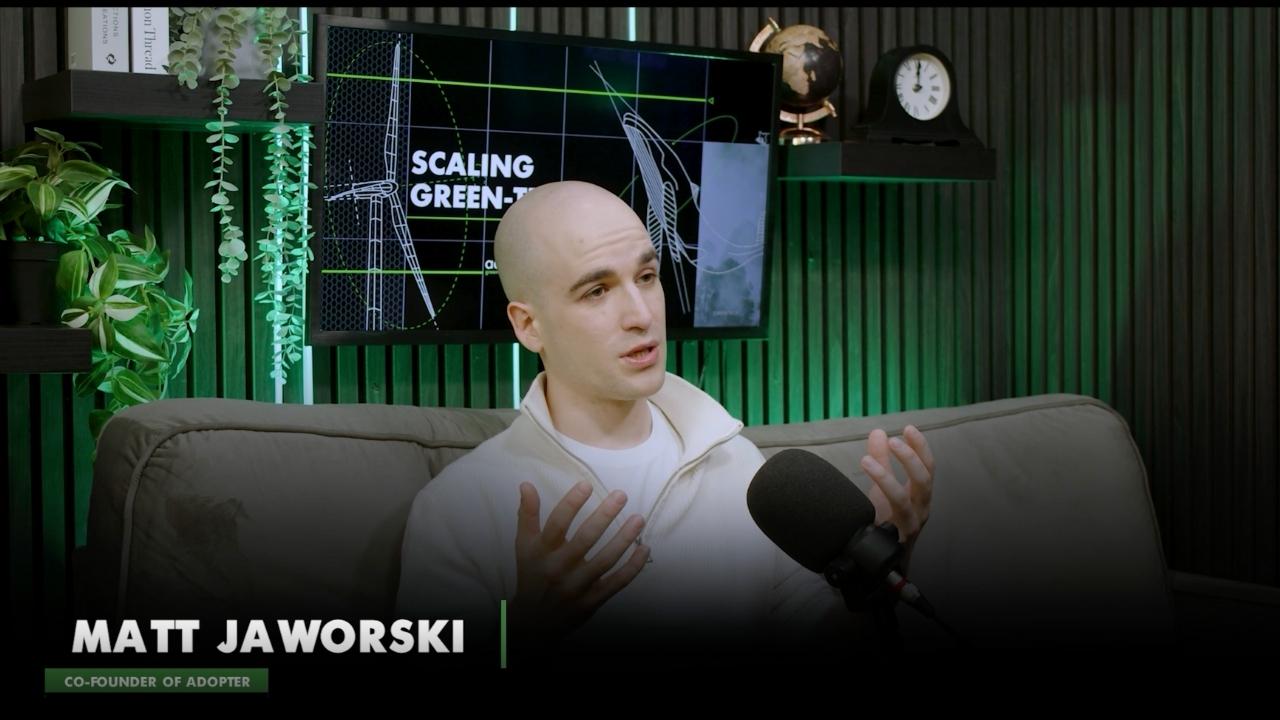
Katherine Keddie: Hello and welcome to Scaling Green-tech with Katherine Keddie and Matt Jaworski.
Matt Jaworski: Hello. Hello.
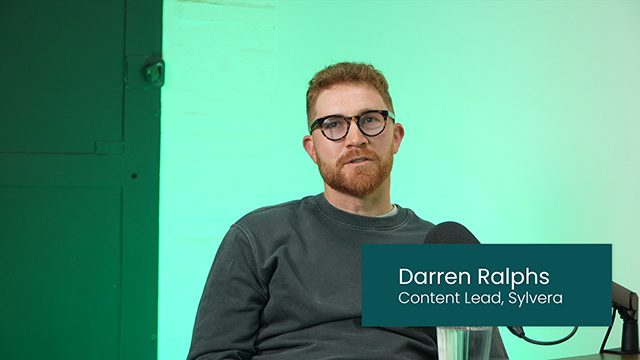
Katherine Keddie: We are here with a very exciting guest, Darren Ralphs, who is a content lead at Sylvera. Thank you so much for joining us.
Darren Ralphs: Great to be here. Looking forward to it, guys.
The bread and butter of Sylvera
Katherine Keddie: So the first question that we always ask is, how would you describe content marketing to a five-year-old?
Darren Ralphs: Yeah, so I think, how would I describe it to a five-year-old. So imagine you really want a bike. What kind of information would your parents need if they're going to buy that bike? It's not all these funky ads shouting you to buy this amazing bike. It's the YouTube videos. It's the five things to learn about the first bike for your children.
It's basically building that trust so that you are the brand and the reasons why you trust that brand before you even go in the bike shop.
Matt Jaworski: And now, how would you explain what Sylvera does and your work to someone who has more than five years?
Darren Ralphs: Yeah. Okay. Yeah, it'd be difficult to describe Sylvera maybe to a 5-year-old, I think.
Yeah. So Sylvera, the bread and butter of why Sylvera exists is to prove and assess the quality of carbon projects. So for the buy side of the market, it's to ensure that their investments in carbon projects have an impact. And then to the sales side of the market, it's to help prove the quality of these amazing projects all around the world to make sure they're getting fair market value for their raising projects.
And I could go on, but in terms of what it actually looks like, we, the bread and butter of the business, are ratings that we were founded in 2020. So assessing these projects all around the world and giving them a rating from triple A to D. And then that has more recently evolved into a kind of really comprehensive data platform that serves both the buy and sell side of the market.
And even more recently, that's expanded into now green commodities, which is a kind of a much bigger market where we're trying to apply the same kind of data and rigour.
Katherine Keddie: And give us a sense of the scale of your company at the moment
Darren Ralphs: In terms of people, size and…
Katherine Keddie: Yeah. Size impact so far, the types of customers that you work with.
Darren Ralphs: Yeah, so we've grown from, I, I don't even know the numbers. I would say less than maybe 10 people back in 2020 to around 150 at the moment. We've got offices in the UK, New York, Singapore, and Japan. And in terms of the companies we serve, as I said we started off mainly selling to corporates.
So some of the big energy companies, consultancies, tech companies use Sylvera to make sure that those investments are having an impact. But then more recently we have, I think there's quite a big demand on the sell side, the developer side of the market to use the Sylvera platform and also inundated with demand for the ratings to the point where we actually started selling to developers as well.
Which was around this time last year. So yeah, that's small developers with maybe a handful of projects in a local region to these major conglomerate developers that rely on our products.
Matt Jaworski: Okay. So how are you different from other companies in the market who also provide similar types of data?
Darren Ralphs: Yeah, for sure. There's lots of amazing competitors. We obviously track competitors. We take snippets from what they do on the marketing side and how they go to market. I would say obviously that, there's probably an element of bias here, but we have the kind of end-to-end platform, which there's not really another offering that has that.
So everything from the ratings all the way through to the kind, the data platform. We also have a new kind of geos geospatial product, which essentially means that we have the best geospatial data and the most accurate geo geospatial data compared to our competitors. So we, I would say to, in a concise answer would be we have the breadth as well as the depth of kind of insight and data.
And to add to that, I think something that isn't on the platform as such or a product is our policy team. So we have some of the best kind of policy minds in the market. We have people that have sat in those rooms with the lead negotiators. We have recently had a member of staff that was part of the US government and negotiator of the US government now leads the course advisory board.
Like we have some real heavy hitters in the policy space, which just gives a kind of layer of insight to like the data and the ratings that again, like not many other companies out there have that.
Standing out in the market
Katherine Keddie: And when you are, obviously we're here to talk about marketing, marketer to marketer, how do you differentiate yourself?
Because it is a very busy market and there's a lot of people claiming, for example, to have the most accurate geospatial data.
Darren Ralphs: Yeah.
Katherine Keddie: For example. How do you make the case through the marketing that you do?
Darren Ralphs: I think I wouldn't say this is necessarily a Sylvera policy or it's maybe just how I've always worked is to kind of show and don't tell.
So with, whether that's our policy insight or whether that's our kind of data, it's telling those stories, it's giving value to the audience. It's whether it's COP where you've got two or three other people from Sylvera in the room listening to those, that incredible technical conversations that we can't really understand, our buyers can't understand, to then download that and share that kind of expertise or whether that's pulling the really interesting nuggets of data out of our data platform, telling the stories as to this has happened into the market, in the market and this is what it means for you.
It's, yeah, it's, I don't think we do loads of like brand messaging, that type of thing. Doesn't mean we couldn't at some point, it's actually using what we have and showing it to the market.
Content strategy for 2026
Matt Jaworski: And what would you say is your common strategy for 2026?
Darren Ralphs: It's a good question. It is probably building on what we've done previously.
If I was to, if I was to maybe condense it into an answer, I think, we had four or five years, most of it before I joined the company where our kind of default marketing mode and voice and messaging was to the buy side of the market, basically corporate buyers and investors. More recently, because we have opened up some of our products to the developer side of the market, I think there's, there's some reactive stuff.
We've had to change things on the website, build new solutions pages and product pages to talk to developers. But there's also a whole load of marketing activity campaigns, outreach that we've only just started scratching the service off to developers. For example, when you launch an industry report, every year we do the State of Carbon Credits report.
That's our kind of flagship report. I think of a lot of messaging in there. A lot of the data points traditionally would've been geared more to the buy side of the market and what they're interested in. We now have to do different cuts of that data. We have to do different nurtures and then that kind of carries us through the year with that sort of approach.
And that's the kind of approach that we take to most of our campaigns now.
Katherine Keddie: So building something substantial and then chopping it into chunks for specific audience types.
Darren Ralphs: Yeah, exactly. So we'll do maybe two or three of those activities that almost transcend all of our segments.
And then there is a kind of, yeah, nurture or like these kind of mini campaigns that follow up to yeah, target some of those insights more to the ICPs.
Katherine Keddie: And aside from the state of Carbon Credit report, which is an annual report, really substantial, really high quality, what's primary data?
What other kind of content items do you have planned or do you have as one of those three, let's say, substantial parts of your strategy?
Darren Ralphs: Yeah, so we have, yeah, so if you think about the kind of the data storytelling we have, yeah, the state of carbon credits report, which is published in January.
We follow that with these quarterly mini reports and webinars. That again, further touch points because it is that type of market where things can change in a month, three months.
So we try to stay ahead of that. And then in terms of other reports, it will be things around things like policy changes.
So article six, which tends to follow COP because that's where a lot of the big changes happen. Yeah, we've done that kind of thing every year. And then CORSIA article six reports throughout the year. There's another CORSIA one coming in the next couple of months which we're quite excited about because it's using some of our latest data which is a new thing for the market.
Building reputation with content recycling and repetition
Katherine Keddie: So looking specifically at that kind of flagship annual report, let's go into it in a bit more detail. So how do you measure the success of a report like that?
Darren Ralphs: Yeah, it's a difficult one and we talk about this regularly, even though the report was released three or four months ago.
In terms of the, what success looks like for that report, because it's still rolling.
It is our big, I would call it kind of funnel filler at the start of the year. Whereas other campaigns are medium or lower funnel in terms of we're trying to get demo requests or we're trying to get in the room with certain companies.
So to answer your question, success is expanding our database to new contacts. It is driving engagement with maybe signups to our free access. We have a kind of freemium free access area in the platform. It's maybe expanding to new audiences, developer audiences and trying to engage them in new ways that we haven't before.
We have some quite good data on that. It's also SEO, like if we, I'm sure we're going to talk about SEO at some point. We do a whole load of blogs. We update old blogs using a lot of the new data and that you, on the graphs, you just, you see an uptick in January through kind of summer SEO traffic under a lot of those segments.
Yeah. It powers our SEO strategy for the next six months. Basically. A lot of that data content.
Katherine Keddie: I think the recycling distribution element is really important here. So you've got this really high quality, high integrity report that obviously takes a lot of work to create and it's this foundational thing.
And you've also got the annual element. So there's a repetition tool which allows you to build a reputation for this report and for the information that you can bring. But you are also eking out all of the different channels, the blogs, like you're finding lots of opportunities to use that report effectively.
So I think for those who are listening, who are interested in what it takes to do a successful content marketing strategy, that's lesson number one, right? Find something that you can reuse.
Darren Ralphs: I think especially like I work in a small marketing team, I'm the only content marketer. We rely on agencies for some of the blogs and SEO stuff that we do.
I lead all of the kind of thought leadership content, the long form content that we do. You have to think about where you are going to get the most bang for your buck and economies of scale. How are you then going to use that throughout six months, even 12 months? And also something that I've worked in marketing teams in the past where, oh, we're going to update those, like top 20, top 30 blogs.
Update them with the new data, update them, new messaging, new product position like at the start of the year or every six months. A lot of time. I've never actually done that because there's always something new or important that kind of takes precedent. We made sure in January after we launched this report, we went back through, I think it was like the top 50 blogs organically and where we could, we updated all of that positioning, all of the data, the dates, simple things like 20 25, 20 26, then updating the data.
Classic. Yeah. It's the stuff that personally, like I've never taken the time to do that. Blocked out three days to do it. And there is just, we went through it a few months ago with our agency. There's just a huge uptick in all of those impressions, clicks on all of those blogs, even like blogs that are two years old and now getting traffic that they weren't getting.
Matt Jaworski: Yeah, it's one of those things that a piece of content you make, you can make it an evergreen piece of content if you keep doing this slight refresh once a year because in 2026, who is looking for data from 2024, right? Everyone wants the most up to date.
Darren Ralphs: Yeah. And I think LLMs as well, I'm sure we'll come to talk about LLMs. They’re the same as SEO or Google, they're looking for the most recent data, looking for the most recent insights. And yeah, if you can be that company that's updated their data in the last six months as opposed to the one that hasn't done it for 18 months, you're going to be ranking higher.
Matt Jaworski: That's what we also do. It's even on our own website. And what leads to good citations for SEO, good traffic from LMS and then also better visibility in terms of traffic?
Katherine Keddie: Yeah, exactly. Absolutely. I completely agree. It's one of those really boring tasks that is so valuable. It's really common. One is people doing loads of beautiful LinkedIn content, but not taking the time to increase their following through inviting people to the page or sending out connection requests.
Those things are quite boring, but they're so valuable for just making the most of the effort that you put into the content and recycling over time. Across our client accounts, we find that you can create a piece and then it lives for three, four years, but that only happens if you recycle and update things as they go and hyperlink things across to the new resource.
You're trying to keep that thing alive and that's how you get value for money.
Darren Ralphs: Yeah, exactly. And I think it's a really hard thing because I think you need to, or maybe there is a system, maybe there's a tool that does this, that I haven't come across. As the main content person, I would see a lot of that role as being almost this kind of encyclopaedic knowledge of all of the content that we've done, which content's performing well, what that new messaging is, what's important and maybe what isn't. Because you can't do everything. I think that's such an important part of the role.
Matt Jaworski: I have this role on our team for, again, our own marketing, and a part of it is, for example, keeping track of the team's work with clients and making sure that we update the case studies that we have on our website reflect that. I know you guys have plenty of case studies. I'm sure you also need to keep tabs on all that.
Darren Ralphs: Yeah. Yes. Again, it's just such an important thing. It's I think if I'm coming across the company for the first time and I may be seeing something, obviously this is aside from just the pure kind of performance side of SEO and stuff, but if just on the basic level, if I'm seeing something outdated, and maybe it's just because I'm a marketer is how I think.
Maybe there's just a slight element of doubt of okay, they've missed something or they're not accurate or they're not up to date. And if that's then put in the same room as a competitor where that messaging is really sharp or up to date, then it's just an opportunity missed.
Improving LLM citation performance
Matt Jaworski: We've been dancing around the idea of AI and LLMs a few times already during this recording session, but we can start getting more and more into it because what you describe is not just how people view websites, but how LLMs view them when they decide what to recommend and who to recommend.
One of the factors is whether there is regular content. So then a post once every six months is much weaker than a regular monthly to weekly, maybe even weekly piece of content going out, showing that the website is a live company and it's growing.
Darren Ralphs: Yeah, for sure. I would say maybe 12 months ago, if you'd have asked me what our LLM strategy was, the honest answer would've been we don't have one.
I'd maybe blank something around we have a really strong SEO authority, so that probably is going to feed into LLMs which is I think true since then. And again, this is credit to our agency to do the big lift on this side. We've done a few things. So for example, I may do something that 10 years ago would've been called a long-tail strategy.
We have proactively gone through some sales calls, gone through sales decks. Yeah. Like Notion pages and a lot of the documentation around those and crawled those for those, yeah, those long tail search terms, those things that actually come out of sales conversations people actually talk about in a human way.
That is now how LLMs are looking to find content as well. And fed that into our content. And then in terms of the kind of reporting, again, like this is all very new to me, but our agency has led on it. They use a lot of the tracking tools to track your visibility against competitors, how that changes over time, positive versus negative citations and that sort of thing.
Again, it seems that fortunately we are performing quite well. And I think a lot of that is just because we've done the right things over a long period of time and we have that kind of authoritative voice. But yeah, it's really interesting. It seems to be changing so much over time. It's crazy.
Matt Jaworski: Oh, and it's rapidly expanding and most people are still trying to get a grip on it.
But what you mentioned about SEO and LMS similarities, it's a very interesting theme because you sometimes get, especially on LinkedIn, people who say oh LMS are completely changing how we need to optimise the websites and design them. And it's very different from SEO Playbook.
What you need to do is you need to focus on genuine questions that people have and long tail keywords, which is actually what SEO has been about for a very long time, like you described yourself. However, obviously there are still changes and new things and things like recency started to matter even more now.
Things like a comprehensive image of the company being possible to get from the website, right? Being able to understand it in one go gain importance. Things like showcasing the team and the experience of it. Especially maybe for smaller companies that don't have such a big track record like you guys, that's all the factors that an LLM would analyse and then assess whether to recommend a company unlike a search engine that would focus maybe on the relevance to a very specific query, but not on this holistic picture like, a person or an assistant shortlisting suppliers for you would do.
SEO and relevant, varied content for LLMs
Darren Ralphs: Yeah. Yeah, for sure. And we as I think if I remember doing a search, and actually we sometimes, I'm sure other companies have this, you might get your you might get your CEO or your VP of sales be like, oh, I've just done a LLM comparison of us and some of our competitors. Fortunately, we have always performed quite well in those types of searches.
A lot of this is qualitative. But as I said, the data we get from our agency also backs it up, if I'm honest, if we weren't to be performing well in those. I don't know if there's a kind of out of the box strategy to change that overnight. I think it is probably years of authoritative content.
Interesting content. Relevant content, doing all the right things with SEO and things you would've done 10 years ago, just ticking the right boxes over time.
Matt Jaworski: It's one of those things that compound with time, isn't it? Like saving for retirement? So if you're in your late fifties and you realise, oh no, I need to start saving for retirement, then it'll be much tougher than if you start in your early twenties, right?
But obviously better late than ever. So we need to start somewhere. Everyone has to start from somewhere and that's when you start making actions that give you the benefits and you can start seeing the results in a couple of months. But nothing will be two years of a consistent strategy built around putting meaningful content actually aligned with what people are looking for.
And they're answering their questions for targeting those kinds of LLMs and sources. Because if you don't have this understanding of the customers and what they're looking for, then all those like tricks like add FAQs to the website, add schema markups to the website, add more pages to the website that make sure that you address those queries.
Or that you have every offering illustrated webpage on the website so people and LMS don't have to guess about what you do and the relevance of it. They become gimmicks because if you don't understand the customer, you can't do those in a way that is relevant to customers and their AI assistance that are assessing you.
Katherine Keddie: It's interesting that you talk about how well you are performing when it comes to LLM, particularly when it's looking at comparisons between yourself and competitors. because we've actually been doing some research in this area. I don’t know if Matt, if you want to talk about that.
Matt Jaworski: I would love to. That's one of the specific things I had in mind for today.
So we did an in depth research in the space of climate nature and carbon data analysing 111 websites in the space for different factors that we grouped into a GEO readiness framework. And Sylvera I came out on top.
Darren Ralphs: Nice.
Matt Jaworski: So the strategy that you guys used overall building a website that is content rich that's relevant to audiences, that has all the services offerings laid out clearly, that has case studies, that has active blogs, that has reports on frameworks and methodologies that's ticking all the boxes that you need for LLM visibility.
So when you mentioned that you are getting LLM traffic, that when people on the side of your client teams on the side of your team check things out with ChatGPT or another cloud and say that, oh yeah. Like we are doing well in comparisons. That's the result of all this that we've been discussing so far.
And our research also confirms it when we did some model level checks with the AI models on how they portray you. By model level checks, we mean we've turned off web search. So just the data that is baked into the model that it learned, right? Not the one that is sourcing from the internet.
It had an accurate understanding of the company, of the space of what it does. It was able to crawl the website, we're able to get all the information that is relevant for AI assessments from it, and it also ticks all the boxes. Surprise on the SEO technical assessments, which are also relevant for at least part of the M'S understanding, which as we talked goes much deeper.
So you have structured data and schema markups across the website. You have clear heading hierarchies and so on is maybe like one small thing that you could improve. I can tell you if you are interested.
Darren Ralphs: Yeah. Yeah.
Matt Jaworski: So that's speed on some of the pages. That's we run most of the pages on your website through page speed insights assessment and it's shown that it's below what it should be.
It would be around, I think 50 out of a hundred rather than this, the green bracket that would be I think above 80 out of a hundred.
Darren Ralphs: Yeah.
Matt Jaworski: But it's still just one of the ranking factors on the others. You are absolutely leading and it's great to hear that, it's paying off.
Darren Ralphs: Yeah. Yeah. Nice. That's really interesting. I'd say, yeah. Page speed. We haven't thought too much about one thing that we have been, I'd say worried about, but conscious of is our business, the offering has diversified compared to maybe we were even like two years ago, we were a ratings agency.
Diversifying your offering from a strong position
Now we still have D ratings. Nothing's changed there. We also have this data platform that's a huge part of our offering. We also have this geospatial offering, and we've diversified into commodities, which is a whole new space for us.
And we have the kind of policy expertise lately over the top of everything.
The thing we have been slightly worried about is being the jack of all trades and a master of none in terms of visibility on LLMs, SEO, I don't think it's played out that way yet, for sure. Some of the newer segments, we're trying to go into geospatial commodities, like we don't have the visibility or brand authority there that we have in ratings or carbon data.
But yeah, that's been, I'd say probably the main kind of, yeah. Consideration for our kind of SEO and LM strategy recently, and I'm sure like other people that are going into new markets or have a new product line maybe experienced similar things.
Matt Jaworski: Oh yeah, that's a sort of standard concern, isn't it? You get into something new, you need to start getting indexed and then shown for it to build up the track record reputation.
But if you're starting from a strong position, it's much easier than if you were starting from scratch or from a situation where you completely neglected this marketing backbone of the business.
Darren Ralphs: And I think it's everything from, we had a homepage that would've listed ratings. It would've just spoken about ratings.
We'd have had, most of the content on our website would've spoken about ratings. Now there's a whole breadth of content. We, I wouldn't say we've neglected that side of the marketing, but it's just not a focus for a lot of our kind of net new content. And, that may pan out in a few months time to mean that we maybe notched down some of the visibility against competitors there.
And that's something we have to consider.
Katherine Keddie: Yeah. But then you have this backlog of content that you are actively recycling. Yeah. That is still good and in the right position. So it's not that if you make a short-term decision to go in another direction, that it negates any of that previous work that's been done.
Darren Ralphs: Yeah. That's the hope. And that's we, and that, that is some of the content that we update. So yeah, just as an example, a lot of our kind of organic traffic on the rating side is where either buyers or maybe developers are searching around what does quality look like for this carbon project type?
Whether that's like some of the new CDR removal project types, or even some like REDD+, which is like a slightly controversial project type.
So obviously we have always had that authoritative voice. Nothing has changed. We have new data there so we can update a lot of that content.
So yeah we are actively doing that. It's just the kind of, yeah, slightly diluted messaging maybe on the website is something we've been considering.
Matt Jaworski: If you think about it from the perspective of a customer, which again, is reflected in the LLMs. If it's a new type of offering for a company, it means that you're not going to have as many case studies on successful projects with big brands with this type of offering, which means that the perception of you as a company and the information shown further will be thinner.
But as you build it up, you will naturally boost it and become more credible as a voice for LMS and through users.
Building GEO into 2026 marketing strategy
Katherine Keddie: It's interesting looking at this, the differences when it comes to adjusting your strategy for, let's call it geo, I'm just going to use one acronym going forward. Yeah. Because in some ways there are new things that we're learning about how specifically to cater your strategy to help with that type of ranking.
But a lot of it is based on good marketing fundamentals, understanding who your customer is, understanding the questions that they're going to ask and allowing them to self-service when it comes to the sales process. Creating interesting first type content with original data. All of these things are very fundamental in terms of being a good marketer and considering content marketing an effective and crucial part of the commercial engine of your company.
So do you find when considering how GEO is affecting your strategy, that a lot of those principles are consistent with what you were previously doing? Or is there more of a shift than maybe I'm giving credit for in terms of how you're approaching this going forward?
Darren Ralphs: I think there's, I think actually because we've had such good results in just organic in general.
So for example, we compared to a year ago and I was looking at these stats last week, our kind of organic traffic has doubled. This is purely SEO Google Organic traffic has doubled in the last year. And that's at the same time where a lot of us are told that because of AI Overviews and LLMs, that organic traffic should be reduced.
Obviously that is because we've made a conscious effort to lean into SEO a little bit more. I think because we are publishing a lot of, yeah, new data, a lot of the content that ticks the right boxes. I'm sure that there is reduced traffic because of LMS and R overviews. That's probably beyond, but beyond doubt in terms of even when I'm searching, I'm not clicking as much.
I'm using Claude to do my searches now like that. You can't doubt that. But yeah, in terms of the actual strategy, I think we started seeing results probably May, June-time last year of an uptick after we've onboarded our SEO agency after we'd started proactively delivering SEO focused content as well as some of the new data content.
Because actually that data product that I've mentioned a few times in terms of our carbon data platform that was only launched this, the sort of mid 2025, we were getting some of the data from it before it was launched that we could use on the marketing side. So really it's a snowballing effect of a lot of these things happening.
Then we've seen the results, we've lent into it more with our agency as well as what we do internally. Again, if, yeah, if you'd have asked me in January, 2025, which is shortly after I joined the company, the SEO was going to be our big win. Maybe I could have joined the dots of some of our areas of expertise and, but I don't think I'd have seen it.
It was panning out this well, to be honest.
Katherine Keddie: So SEO's been the big kind of breakthrough, standout aspect of your marketing activity over the last year or so. What else are you experimenting with going forward, aside from the SEO work, the GEO work and the work on your website?
Darren Ralphs: Yeah, I think almost maybe because we've been successful at filling the top of the funnel, the funnel I wouldn't say further down the funnel has been neglected.
But partly because of resourcing the team and partly because of just trying to figure out what this looks like for us is yeah, the mid to lower funnel content. So things like working with, we have a product marketer so he works quite closely with sales on giving them kind of assets and tools that they can use in sales conversations or as follow ups and outreach, a, BM, that type of thing.
Appealing to different decision-makers
Probably working with him in that. And then also things around. Working with our customer success team or our kind of AEs and account teams to understand a little bit more about maybe how to package products together, bundle or kind of upsell and then what is needed and the, yeah, I keep talking about the funnel, but this, or I see it as a, this is how I think, I see it as a kind of medium funnel or mid funnel content is, that these contacts, these leads, these prospects are brand aware.
They know Sylvera, they probably have an understanding of the offering. I think one of the really interesting things about B2B marketing is understanding things like buyer cycles and how these types of prospects actually buy the thing you're trying to sell.
Katherine Keddie: Yeah.
Darren Ralphs: So yeah, I think that's, and I don't necessarily think we've got this right actually for Sylvera just yet.
I think we are trying a few different things. But I think that's also quite interesting in this space because there are probably different levels of maturity compared to other tech spaces where maybe there's quite a clear procurement team or a clear process for certain types of tech.
Maybe these companies have never bought this type of tech before. Maybe they don't quite know what team it should sit in or the stakeholders should be involved in it. They shouldn't, they don't know how much it should cost or how they should use it or how often they should use it. I think there is some quite interesting kind of content and opportunities to help educate that kind of buying process that I think is some people don't see it as exciting, but I think as a B2B marketer, that is one of the more exciting things that you don't necessarily get so much in a B2C side.
Katherine Keddie: You're talking to the right people.
Matt Jaworski: I think it comes to being like a, a game of chess or maybe even of poker, trying to figure out how it works and then how do you address different decision makers through the content, what the kind of procurement versus the CEO versus the part of the team who would be actually using the solution need to see on the web webpage for your offering that is at the very bottom of the marketing funnel to press the button and move forward to the sales conversation or actually complete the sales conversation if you are supporting their decision making with website resources.
Darren Ralphs: Yeah, exactly. It is super interesting and I still learn about this kind of weekly as to how people use the product or procure the product or procure carbon credits. Even you might have some of the major energy companies that have a whole team that's been like existed for years purely dedicated to this.
At the other end of the scale, you might have a relatively new buyer that's just starting out, doesn't, maybe, doesn't even have a budget for carbon credits yet. Needs to understand how much things cost, what they should buy, and then takes that to the CFO and then there's a whole kind of business case that you can help support.
It's super interesting. It's such a new space still.
Using content marketing in sales
Katherine Keddie: As soon as you said that we were both nodding very excitedly because I think it's something often neglected in the conversation, particularly about content marketing, which is seen. In my opinion, very wrongly as being something that is either like social media related, top of funnel or something that's blog on the website that no one looks at.
I think people fail to understand sometimes the very real tangible sales role that content plays. And a lot of our work is focused on identifying who the ideal customer profiles are, and then within that, who is in the buying committee. And then within that, what does the buying process actually look like?
And particularly with B2B sales, there can be these very complex buying cycles where you might have one person who's at one stage of the buying cycle, they feel like they have a really good idea of your product and they're ready to buy. And then you might have the next person in the buying process who has absolutely no idea that there's a problem even to begin with that you're trying to solve.
So understanding how that process works and consistently updating and checking in with the sales team and aligning it with the marketing activity, I think is really crucial and is a huge part of our work. And I'm sure of yours as well.
Darren Ralphs: Yeah, it's huge. And I'd say that's and this isn't just down to me, this is down to our, particularly our product marketer who has really lent into this and seen a lot of areas where we can improve.
So it's another reason why this year, I would say last year, Sylvera's marketing was product or release focused. So we've got these incredible new products that we're launching, and then every time we do one of those, we would maybe package it for project developers, for buyers, for investors.
This year we have flipped that slightly. So the strategy is. Under each of those ICPs, basically a kind of net new content strategy per ICP to make sure we are doing exactly that to make sure we are building specific content blogs, assets that talk to them, like really granular pain points. Whether it's the buying decisions, whether it's like some of the weekly pain points that they have, whether it's talk, like understanding their customers and who they're selling to internally or externally, this type of stuff.
I just, I don't think we were there before and there's still a bit of work to do to get there, but that's the kind of content we're focusing on a little bit more now, not neglecting the top of funnel, but some of that stuff is taking care of itself a little bit. It's building out that kind of mid to lower funnel strategy.
Katherine Keddie: Yeah, the reality is you have to have the whole thing working to generate leads. Fundamentally, that's what we're trying to do is have you're raising awareness and then you are able to start to convince people and then you're going through the buying process. And I think what's really interesting about B2B marketing is where I think traditionally it's been common to say, okay, this, I don't know, area of construction is the segment that we're focused on.
Let's say we're talking about concrete companies, for example. We are going to go for this as a segment and that's who we're trying to speak to. But that's actually firstly huge, a huge category in terms of the number of concrete companies.
And then also a huge category in terms of the people that are making the decision within the process.
So understanding what that looks like in detail and being able to really focus your marketing efforts is crucial for making substantial sales in this area.
Darren Ralphs: Yeah, it's true. And I think that's where even I talk about those kinds of three ICP groups at quite a high level actually, the chances are a lot of the campaigns we're going to do are going to be segmented even within those, say, there might be energy buyers, automotive buyers.
The developer side, it was probably going to be more around specific project types. It's, yeah, it is quite a sophisticated thing that we're trying to do, but at the same time, we're quite confident that's where the results are going to lie in sort of six months' time.
Matt Jaworski: And if you don't do that, if you try to keep it broader, then you will miss those specific questions in specific answers that make things relevant.
Darren Ralphs: Yeah. And I think like some of the metrics that the best marketing teams track, and I wouldn't necessarily put us in that category, but it's where we want to get to is under understanding kind of close rates, understanding the speed and how to accelerate through marketing, through good content and product marketing, that type of thing.
I don't think we're quite there yet, but if you can shorten deal cycles, if you can expand deal sizes, that's also where I think you're building credibility as a marketing team where you can show those stats off to the CFO to the CEO.
Matt Jaworski: Oh yeah. And that's something that can be amazing. But it also requires collaboration of the sales and marketing teams, which sometimes are a bit in opposition, where they maybe try to shift responsibility for lack of progress on their end or something like that.
But if you're working together, then you can actually get those real marketing impact metrics. Not likes, engagement, counts or clicks, but okay. How has the deal close rate changed when we involved content as a part of the Yeah, exactly. Sales pipeline. Even from our own experience, when I have a meeting with a potential client for adopter and after the initial meeting when we discuss what they would like to work on, when I start preparing a proposal, I sent them a couple of case studies on our website that leads to much better proposal review meetings and close rates and much faster deal.
Because they come to the proposal meeting saying, oh, I already read everything about your company. I shared it with my team. You are very aligned with what we need. We really want to work with you. So let's, now let's confirm that the scope of work is right and the price is right, but like we chose you already.
And that has a value, right?
CRMs and collecting valuable data
Darren Ralphs: Yeah. For sure. And we try to tell those stories where we can. So again, it's like there's a lot of data out there, right? If we use HubSpot or other, some of the other CM tools without getting too stalkerish, you can, like, when I see the deal flash up on Slack or whatever it is, sometimes I will go in there, particularly if I know it is marketing generated or marketing influenced, I might just have a look at which blogs, which case studies have they made, what they downloaded, and then whether that's, formally or whether that's just in, in a coffee chat, I can just raise, oh, that they read that report, that they came from here, that they engaged with like, all of this content.
Again, I think it's just, and we are, I think we are in a fortunate position with Sylvera where we have a genuinely extremely strong kind of brand authority in the space. I think most people that are active in the market know Sylvera. So as I said, like our blog is one of our biggest kind of functions of the marketing team in terms of what drives views, what drives pipeline, what drives a lot of our engagement gets like 3000 views a week or something, which for a company our size is quite good.
People have either kind of entered your funnel that way, or at the very least you've influenced those deals in a way that, to be honest, at previous companies, I don't think I could stand up and say that confidently.
Matt Jaworski: A hundred percent. And then if you're using HubSpot or maybe similar solution for firmographic data like Leadfeeder, Snitcher, Albacross, whatever, then you can also see what companies are reading the content and visiting your website.
And then you can, we do it with some of our clients where you can see that someone from a company of interest they're targeting through an A BM campaign, visited their website organically. Then two days later, someone from the national office came to their website through an actual internal tool.
And then you see that the content has been viewed by three people in the head office that is based in the US and then next week they get a call and you can clearly see this progression or you can see it alongside a deal that's happening. And you know that when people from the head office in the US are starting to browse through your websites in, a couple of them, that's when the deal is starting to move somewhere and getting through those kinds of initial assessments and gatekeepers and is accelerating as and is on a good path for closing.
Darren Ralphs: Yeah, for sure.
Katherine Keddie: Yeah. We have clients where the KPIs for our work are, have one of these five specific companies engaged with the content, viewed the website, et cetera. So I think it's also really helpful as a marketing team to be informed by the sales team as well. So it's one part of it that we've explored, which is proving ROI of marketing, which is absolutely crucial.
And there's the other side which is ensuring that the marketing work is aligned exactly with what is working on the sales side. because the salespeople are the ones who are out there, every single day speaking to customers or potential customers. So in our work, like I say, a lot of the KPIs are informed by specific sales touchpoints.
And additionally, we'll spend a lot of time with the sales team interviewing them, getting feedback from them, understanding the questions that they're asked and factoring that into the content. And we do that also in our own company. So let's say someone asked me a question and we're discussing potentially working together, I'll immediately go to Matt and say, it would be so helpful to have a resource on this question next time it comes up, I'm, sharing that information.
That, that give that push and pull between the sales and marketing team is so crucial for both to work effectively,
Matt Jaworski: But then also the delivery team, which influences what can go into case studies or gives ideas for content pieces saying that, oh, by the way, you guys have those questions and here is a unique way of answering this question based on our customer methodology, for example.
Katherine Keddie: Yeah, absolutely. So it's also helping and giving new fresh information, expertise to existing clients that we work with, which is obviously a value add And as, as a company that has established themselves in the space on the basis of their hate this term because it's overused, but thought leadership.
Darren Ralphs: Yeah.
Katherine Keddie: I think it's so valuable to have that cycle going as a value add throughout the process.
Darren Ralphs: Yeah, for sure. There's definitely, I learn new things every week, but you can get, whether it's a coffee chat, whether it's weekly sales calls, whatever they like, whatever channel, it doesn't really matter, but.
We, it might be how a developer has used the platform or used a specific type of data point that we knew existed, but we didn't know actually they were using it. That in that way that then if a sales person hasn't told us that, yeah, if we don't have that information, we can't update the one pager, we can't make sure that somewhere in our website or in a case study or maybe we're going to do our next data for our next data driven piece might include a couple of lines on that type of data angle.
That's, in some ways I wish there was more of a system that we had in place to get all of that information and decipher that information and get those real nuggets consistently. But at the same time, we do have a good relationship, particularly our product marketer who is in all of those conversations, gets all that information. It's absolutely invaluable.
Founder-led content
Katherine Keddie: So another subject that we haven't touched on so far, but I think is really interesting and we're asked about a lot, is founder-led or executive-led content and the role that plays. So we find in our work that a post from a founder or a CEO or an executive performs three times better on average than something from the company account. How are you approaching that in your company?
Darren Ralphs: Yeah, I don't think we're doing a great job of it and it's an area that we have spoken about a lot recently. We did our own research last year and it was, I think it was seven to eight times in terms of engagement.
Katherine Keddie: Wow. Yeah.
Darren Ralphs: Compared to our, I think the company pages unfortunately are yeah, they're getting less traction. So yeah, it's something we are trying to address now. We have a couple of I would call them like flag bearers that we're using in the business particularly in the commodities, because that's an area where we're trying to build visibility and we see it as a way of building kind of visibility in a new market.
Obviously on the company page, but also through thought leadership for leadership ads. And yeah, like PR as well as on LinkedIn. So it is still quite early to say that's been a success, but that has been a significant area of focus on LinkedIn where we haven't really had it before.
In terms of the kind of exec or founder led content, I think the opportunity really for Sylvera is maybe. I think we consciously play it quite safe or neutral with a lot of our content. Which I think does bring a level of authority and trust in the market, which is foundational to what we do.
But that doesn't mean that has to be the case a hundred percent of the time for Yeah, our thought leaders, they might have an opinion or a kind of a pointed view on things that I think we should tell their stories a little bit more. And also because again I don’t know if this is just common for the space that we are in, I would say there's genuine kind of expertise, knowledge, passion that maybe you're not going to get in some of the spaces that I'm from, like software tech, like we've got, I look across the business there's PhDs there's genuine knowledge, whether it's in the geospatial side, the policy side, our founder himself, like there is so much knowledge and they are the people that can connect what is happening in the market to what happens to our audiences.
So we are just trying to start out, share actually with our CEO in getting more, a bit more active on LinkedIn. I think the challenge, and I'm sure lots of marketers out there the challenge is creating a system where it's not a big burden on their time. Maybe also not a huge burden on your time and there's probably, maybe using AI and some of those tools makes it a little bit easier now.
But we are just starting out of this programme right now. because I think it is an opportunity, otherwise we wouldn't be doing it. But we just haven't made a success of it yet.
Using AI effectively in content delivery
Katherine Keddie: And how are you using AI as part of your content delivery process at the moment?
Darren Ralphs: Yeah, I think I think it has changed a little bit in terms of how it's perceived by marketers or, I listened to lots of kind of podcasts about this and like how it's, I think there was maybe, it must have been maybe two or three years ago when people first started using it was this kind of ethical or almost the art of content was being diluted somewhat, which I think there is a case for that, but I use it in most of the content that we now create, and I wouldn't shy away from that.
We have a kind of ring-fenced version of Claude I'm sure a lot of companies use. So it's safe.
Like we don't lose any of the data. So if I'm having a really interesting conversation on a call with someone and I can use those Granola notes or those Gemini notes, I don't, I think it just makes sense to, to be rolling that into the Claude workflow that I spent probably the best part of 18 months building.
To make sure that the content isn't just AI slop, it is actually useful content because the ingredients going in are high quality. I'm not just prompting saying, can you write a blog on a blog and X, y, Z with no extra context, no new data, no new insights from our amazing experts. All of the ingredients that go into that blog are strong.
And then there's obviously an editorial process that we go through as well. That means that the tone of voice is aligned with how we talk about things. Anyone that's used Claude to write net new content will know that they throw in just random sentences at the start of a paragraph at the end of a paragraph, or to double down on a certain point.
That is not how a human writes. So you try to filter that out if it hasn't already filtered that out already in your kind of guidance. Yeah. I don't think it's perfect, but I wouldn't be able to do my job to the kind of volume and level that I do it without AI now. That's just, that's the way it is for me personally.
Matt Jaworski: I had similar experiences working on our content for our adopter stuff, like writing case studies, writing some of the articles. It's, I find it to be a great sparring partner to help me formulate things. Yeah. Structure things, but I still need to go through it sentence by sentence, paragraph by paragraph editing, tweaking, looking for ways to refine it, improve it, so it sounds like I want it to sound and so that it's free of those like obsolete sentences, hallucinations and things that just don't make sense really.
Darren Ralphs: Yeah. This is it. And I think, my writing process three years ago, for most of my career I would dump something into why I used to call like a rubbish first draft. That's how I used to work with it. I would say what AI has done is remove that first process, which is probably kind of 50, 60% of the time.
So then from there I am iterating. I'm pulling emphasis on certain points. I am still working through the editorial process of what's important, what does the flow feel like? That's too much in that area. I need to maybe adjust the focus here or there. I can still have that really punchy line that I've thought of.
Yeah, I don't, I personally don't find it's removed my creative process or the quality of my writing. It's just made me quicker at what I do. That's how I see it.
Matt Jaworski: Yeah. And it's not the case that some people like to predict, especially if they haven't tried it, right? That they say that. Oh, it's simple, it'll just do the work for you.
Why should we get a marketer? It's not going to choose a really good title for a case study. It'll give you a generic one, then one that doesn't make sense. Then on the first try, we'll do something that has a decent first half, but absolutely awful second half, and you still need to spend half an hour brainstorming a good title, but the result you arrive on can be better than if you were just brainstorming it by yourself.
That's been at least my experience.
Katherine Keddie: No, I totally agree. And I think also coming back to our discussion about understanding what the customer's looking for, what the customer needs, and how the strategy as a whole plays out. Is the expertise that you bring as a content marketing expert, not the initial first rubbish draft that's like just a part of the process.
So having that ability to be able to understand and like critically refine the information that you're given from the expertise that you have is the thing that it remains, but the speed and the, but the speed and the ability to be able to jump between things or be really reactive or be really quick with content is a huge asset.
So understanding how to use it effectively. I think some of the points you made earlier about quality going in, for example, understanding what you're looking for, like these things, building something over time, 18 months to build a system that works for you. Those things are crucial to use effectively because otherwise you end up putting m-dashes on LinkedIn, which is obviously undermining your legitimacy substantially with your customers.
We actually recently wrote an article on the website called ‘Your customers know you're using LLMs’.
Matt Jaworski: Yeah. And how they stop reading, which is a genuine start from some of the currently emerging research in the topic. Yeah. That when you are, when you read theirs, when your buyers in B2B context spot that there are AI tells, they're like, ah, it's AI based.
Okay. I don’t want to read it further.
Katherine Keddie: Yeah. I am that user.
Darren Ralphs: Yeah. Yeah. I wonder if that's because we are marketers, but it's interesting to hear that actually, like non-marketers, buyers are thinking that way. I had, it's the paradox. I had actually just written a piece of content recently, but not using an m-dash, just like a hyphen break.
And the internal person at Sylvera was like, this is AI written. I was like, no, I've actually written this one myself.
Matt Jaworski: Surprising. We had this conversation. We've had. It's, so the article has a whole list of details. It also has some prompts that you can download to remove some of them from your AI.
Let's say to teach it to not to use m dashes like a cloud skill. But then the main thing is that. AI uses it because it's so prevalent in human writing or transcripts of speeches, et cetera. So it's not about grammar. It can sometimes be perfect grammar. And what is the clear tell and issue?
Is it the saturation of it? The concentration of it? Yes. If there are five AI tells in one paragraph. It is AI. If you use it once in an article, it's not X, but Y. Yeah, grammatical structure. People do that sometimes, it's okay.
Darren Ralphs: Yeah. It's annoying. I feel like it's killed my use of the word honestly, I don't think I can use it now.
Katherine Keddie: Yeah. Delve is the big one. Huge increase in the use of the word delve. I love that word. No longer an option. I think
Matt Jaworski: Spearheading was on the list.
Katherine Keddie: spearheading. That's sad.
Matt Jaworski: Although I don't remember using this very often.
Katherine Keddie: You can't anymore. That's the problem. But yeah. No, exactly. Exactly.
Matt Jaworski: As people use it less and less AI will also adapt and we'll use something else.
Katherine Keddie: We have to keep one step ahead.
Matt Jaworski: There was, we had a conversation internally that apparently Oxford comma has started becoming one of AI tells.
Katherine Keddie: Yes. Okay. I'm very anti Oxford comma, so I'm actually fine with that one.
Matt Jaworski: As a non-native speaker, I was taught in school that this is like the most correct version to use English, et cetera.
Darren Ralphs: Maybe we need to rethink that.
Matt Jaworski: The jury is still out. Yeah.
Katherine Keddie: Maybe it's just me or my anti Oxford comma campaign.
Matt Jaworski: Cambridge comma.
Marketing advice for 2026
Katherine Keddie: Very sadly, because this has been a very interesting conversation. We are coming to the end of our time now. So I have a few kind of final questions for you before we finish. The first is, what one piece of advice would you give to a marketing person at your stage of business? In 2026?
Darren Ralphs: It's not going to be tactical. I think it's more around how you show up and it is exactly that. It's to show up. So I think in previous roles, I have always been conscious of the work I do, the impact it has. As long as that is seen by my CMO or my kind of immediate team around me, that's enough.
Probably my experience of working startups in general, but particularly at the moment is. Everyone in leadership or maybe other areas of the business maybe thinks they understand marketing maybe better than they actually do, but that means that you feel a lot of pressure and yeah, a lot of you feel like your decisions are always in the spotlight.
And I would say to own that, so even if it's a small campaign or if it's one of the major kind of reports that you've launched or a big activity, you almost over communicate the results of that. It doesn't have to be perfect. It doesn't have to be arousing success, but show what you're doing on a consistent basis.
It's certainly something I've learned at Sylvera recently. Whether it's some of the content we're creating and how that's performing and then feeding that into the experts that have helped build that content so they understand the impact it's having, what it's worth their time, or whether that's, maybe we want to expand the team soon.
How is the impact that we're having as a marketing team translating to revenue?
And I don't think if you're not visible and you can't tell those stories when they're having those discussions at leadership level, then you're not going to be first in line for that type of thing. Yeah, I think it's, I think it's probably that, to be honest.
Katherine Keddie: I agree with that. Translating marketing as part of the commercial function of your business, I think is so crucial for anyone who's working in this space, but particularly when you're doing complex B2B sales. because it's more challenging to make the case, so you have to be fully equipped to do it.
Darren Ralphs: Yeah.
Katherine Keddie: Okay. And where can people find you online? Those who are listening, who want to hear more or read some interesting content?
Darren Ralphs: Yeah, we've got social, sylvera.com is the website. I wouldn't say we have anything big or major coming up that people should look out for, but we will just be consistently banging that drum.
So anyone that wants to find out some of the new data, what's happening in carbon markets, whether that's like some of the geographical stuff we're doing some deep dives in kind of the European countries coming up, or Japan or Brazil. We've got content there coming up. I think they're interesting because I'm writing that I'm involved in them, but I think they are genuine, there's lots of good nuggets in there for anyone that works in this space.
Katherine Keddie: Okay. Matt, we also mentioned a couple of articles and resources on our website, so do you want to give us a plug and tell people where you can find some of the things we mentioned?
Matt Jaworski: Of course, with great pleasure.
A couple of things that everyone who's been listening to us today should definitely check out are, first and foremost, the report we just released on the geo readiness of the companies in the climate nature data space where we analysed a hundred plus companies looking for the best practises on geo and how they are implemented across the industry.
What are the best PR best practises that the top performance like RA do in their marketing? And what are some of the common pitfalls that companies fall into so that you can learn and improve your own marketing based on that. Then we also have a great episode with another company that is providing data in the similar space, focused more on impact, just impact that you can find on our Spotify website and other stream platforms.
And then finally we have the article about AI tells where you can see all those things that people grew to associate with LMS for better or worse reasons, and how you can steer clear of them, including some prompts and skills for your LLM to teach it to be more like human and it should be when it's helping to create top performing content.
Katherine Keddie: Perfect. Okay. Thank you so much, Darren, for your time. Thank you very much.
Darren Ralphs: Thank you. Enjoyed it. This is amazing.
Katherine Keddie: And for everyone else, catch us on the next episode of Scaling Green Tech. Goodbye.
Matt Jaworski: Bye-bye.
















.jpeg)

.jpeg)

.jpg)