Katherine Keddie: Hello and welcome back to Scaling Green-Tech with me, Katherine Keddie. I'm here with an amazing guest, Declan McEvilly. He is the co-founder of OnePlanetCapital. Thank you so much for joining us.
Declan McEvilly: Thank you for having me.
Katherine Keddie: So the first question that we always ask people, which I think gets the cogs turning and forces succinctness very abruptly.
How would you explain OnePlanetCapital to a 5-year-old?
Declan McEvilly: Yeah, an interesting question. What I've spent some time thinking about doing our job in heavy industry, but we're an investor, and we back climate tech businesses. So to a 5-year-old I would say that we work with people who want to build the next generation of businesses that are saving the environment.
Katherine Keddie: Very nice. I like that. Succinct. Succinct enough. Yeah. I love it. And then for our adult listeners, give us your elevator pitch.
Declan McEvilly: Yeah, absolutely. So we founded OnePlanetCapital six years ago. We are a specialist climate technology investor. We focus specifically on UK businesses from seed to pre-Series A across a range of different climate sub-sectors, including energy, transport, construction and packaging waste and recycling.
Katherine Keddie: Okay, nice. So quite a broad focus.
Declan McEvilly: Yeah. We take climate. We think that climate technology as an investment sub-sector come a long way in the last 10 to 15 years. I think it probably had a bit of a reputation as solar farms.
There is a bit of that, but it's certainly moved a huge way in the last 10 to 15 years to the point now where we think we can build a really exciting, really diverse portfolio for our investors across those different sub-sectors.
Katherine Keddie: We get that too, obviously 'cause we have a climate tech focus at Adopter and I actually love it when people think Okay. So it's like solar. Yeah. Because solar is a fantastic example of a technology that has come as, as a new technology and scales to amazing commercial returns.
So I think if people associate all climate tech was solar and that's probably a good thing in my book. So tell us about what you were doing before OnePlanetCapital. Why did you decide to start? I think it was five or six years ago, right? About
Declan McEvilly: six years now. Yeah. Yeah. So I've been in the venture capital industry for about coming up to 15 years now.
I've always been in that private market sector, so I've always worked with private companies and ultimately looking to help them fundraise to help them grow, to help nurture them. Me and my co-founders are, we think we spotted a bit of a gap in the market. There's a huge amount of opportunity within private markets in the UK under various different schemes that are investing into a load of different sub-sectors, not climate-focused.
We'd saw that wasn't being offered to clients, so we thought there was a gap in the market. We think it's a really strong investment proposition itself, and it allows clients to have additional impact alongside their traditional listed portfolios. Long way of rambling saying we thought there was a gap in the market to provide something that wasn't being provided.
Katherine Keddie: And obviously now there are other funds that provide capital for climate tech. Companies at a similar stage, which was kind of seed and pre series A. How do you create a unique value proposition in that context?
Declan McEvilly: Yes. There are a few businesses that are doing this now and the UK's very good at supporting climate tech.
There, there aren't huge amount of businesses that are doing it, specifically our stage. There's a handful on that, like you mentioned, Seed to pre-Series A. We try and get stuck in as much as possible with our founders that we work with. So often we'll sit on the board, we will try and deliver more than just capital.
Capital is one element that's required for business growth, usually. But there are a lot of different areas that a business needs help with as well and that's why we'll try and get involved ultimately, candidly speaking, to add the most value to our investors.
Katherine Keddie: And give us some examples, like what would be your best example of a company that you've supported that you go back to when you're talking to investors
Declan McEvilly: In terms of additional cap, additional things apart from capital?
Yeah.
Katherine Keddie: Yeah.
Declan McEvilly: Or just generally
Katherine Keddie: No additional things apart from capital. Yeah.
Declan McEvilly: I mean there, there, there's a handful of different businesses in the portfolio, but I would say that of the 60 investments we've done, we sit on the board of about probably 40 of those businesses. We regularly check in with the founders.
Strategic direction is something that I think broadly speaking founders can use help with because that very much ties into the fundraising journey. So given what we do, being an investment manager as someone that provides capital, having that strategic overlay of being able to say we've raised capital today, we've come on board, we're gonna help you.
What does the next 3, 6, 9, 12, 2, 3 4 years look like? When do we need to get ready for the next capital raise? That's vitally important. Anything surrounding runways super, super important. Another thing we do is give introductions to our wider network of startups. There might be a fantastic founder that's developed some fantastic piece of engineering, but they might have gaps in their CV.
They might not have marketing support, they might not have PR support, they might not have recruitment support, things like that. So anything that we can do to plug into their wider business and plug those gaps that they might have, that's something that we'll, we will try and add value as to as well.
Katherine Keddie: Interesting.
OnePlanetCapital's investment thesis
So explain to us what is your investment thesis?
Declan McEvilly: So our investment thesis, it a one line is that we invest into early stage UK climate technology businesses that are making a positive impact on the environment.
So that's super broad. When we go into due diligence and we start to look at businesses, our first headline thing that we look at is this business making a positive impact on the environment? Or climate breaks down into three different scopes. Does the business directly remove carbon? Does the business displace carbon or does the business help transfer over to a less carbon intensive environment?
So if the business doesn't fall into one of these three scopes, that's the sort of thing that in this sector, you can get a grip of quite easily. And if a business doesn't fall into one of those three, that's a no from us in terms of why we would or would not invest into them.
So that's our very first starting point is does it make a positive impact?
Katherine Keddie: Interesting. And when you are analysing positive impact, are you looking at things like more carbon or biodiversity or how do you measure that? 'cause obviously it varies substantially. So it's,
Declan McEvilly: it's really difficult in a word, especially early stage.
So we are dealing with, sometimes we're dealing with a team of two people maybe. So they don't have the scope to be able to deliver reams of reporting on biodiversity. What we do ask for every one of our portfolio companies is that they have a KPI that they can measure of one of those three scopes of carbon displacement removal or a transition to a lower carbon intensive environment.
Most of the businesses in the portfolio scrap that all of the businesses in the portfolio are able to provide those KPIs. And that's something we would agree with them prior to investment. So our investment is fundamentally based on the fact that they would, they are willing to stick to those KPIs and be able to report and deliver on something.
So we don't tend to get involved in biodiversity or water cleanliness, things like that. Some of our portfolio companies do that as a side product, but the main core reason that we are able to ultimately turn around to our investors, who are we, who we are beholden to and say this is the impact of your portfolio is around those climate numbers.
Katherine Keddie: Okay. Interesting. And obviously you're still in some ways quite early days with your fund, six years in.
Declan McEvilly: Yep.
Katherine Keddie: Have you had any exits in your portfolio yet?
Declan McEvilly: We've had no exits yet. We've had a couple of failures along the way. So there's 60 ish investments we've done. We've had three failures.
We've got a couple of our portfolio companies that are performing really well. They're starting to really mature out of, startup land, one of our businesses, RAD Propulsion, they're a Southampton based electric engine manufacturer for the marine space. So outboard engines for Marina Harbours, canals, that kind of thing.
They're on track to deliver five, six, 7 million pounds of revenue this year. So they're starting to move out of classic EIS startup.
Katherine Keddie: Okay. Interesting. And when you're looking at the assessing these companies, obviously we talked a little bit about the, the climate case.
But obviously there has to be a business case too, because at the end of the day what you're focused on is creating returns for investors.
So how do you assess the business case? Yeah. Particularly for early stage, hard tech company. 'cause at that stage there's not so much traction for you to base your
Reframing climate technology as efficiency investing
Declan McEvilly: Yeah, it's a really good question, and it's something that we've become, dare I say, more cutthroat on in recent years. I am an unashamed capitalist.
The businesses that we back, fundamentally, their primary objective is to deliver a return to us and to our investors. That's our primary focus. We just so happen that businesses within the climate technology sector have got a load of different macro factors driving them that actually makes the sector really set up for some strong returns in the future.
As an aside, these businesses have a positive environmental impact, but that's not our core objective. Our core objective here is to provide returns to investors.
So behind every business, there needs to be a really strong economic, a robust economic business case for the business to stand and for us to get behind it.
What I've seen climate evolve into a little bit are, I'm starting to refer to businesses as efficiency businesses. So we're investing into a company, a technology, a widget, whatever it may be, that upon implementation it makes the end user more efficient. It just so happens that efficiency is a reduction in electricity, reduction in carbon reduction in fuel, whatever it might be.
So I'm trying to reframe climates as efficiency investing. It just so happens that efficiency is a reduction of those things. I mentioned,
Katherine Keddie: I've never heard anyone say efficiency investing before. It's something that we talk about a lot with our clients. Because a lot of them, the, the focus is efficiency and the co-benefit is climate impact.
Obviously efficiency comes with a lower cost often too, which is obviously like a, a business case in itself.
Declan McEvilly: But that, that is our fundamental business case, is that the end user of these technologies as a result of implementation of the technology will have a lower cost via reduction in electricity.
Like all those things I mentioned.
Katherine Keddie: Yeah. Interesting. See, I've heard a lot people talking about resilience, for example. Adaptation solutions, obviously that's a kind of a category in itself. Yeah. But I think efficiency is quite a simple framing. I like that.
Declan McEvilly: Yeah. It's, that's something that's resonated well with our investors.
Because I think climate and wider sustainability, I think has gone through a transition. I think, the sector's had a bit of a, dare I say, bad press over the last few years. Wider markets haven't performed as well, specifically in sustainability. So I think a reframing is needed.
And that's something our investors are resonating with, is that efficiency. If they can see an end user, an end company being able to save cost because of this technology, then it makes a lot of sense for us to at least explore the conversation further.
Katherine Keddie: Interesting. Yeah, I think. So we started Adopter six years ago too.
So we began in a very similar market to you, which was, I think, much more positive to climate tech. Yeah. I think people identified more with that label. And now people have more of a focus on efficiency and resilience, on cost saving. Also in, in my experience also more of a focus on identifying within the vertical industry that they're in.
So less of a focus on climate tech and more a focus on biotechnology or construction or finance. Is that aligned with your experience?
Repositioning a fund from sustainable to climate technology
Declan McEvilly: Yeah, absolutely. I think sustainability as a tagline, so to speak has really fallen away I think personally in the last couple of years in terms of its market value, if you like.
Six years ago when we started the fund, our business was called the OnePlanetCapital Sustainable EIS fund. It's now called the OnePlanetCapital Climate Change EIS Fund. And we're thinking about maybe even check calling it the One OnePlanetCapital Climate Technology Fund. So we can see how the theming is evolving.
Quite rightly, how you said six years ago the sustainable space was hot. There was a lot of money flying around. A lot of businesses were getting funded at possibly, high valuations to the current market that we're in. As a result of that. We had a few macro factors. We had, we've had a couple of global wars.
We now we're in a higher interest rate environment. There's a cost of living crisis. There's a lot of different things that in the pot have caused the sustainable market specifically to struggle. It's not to say that all businesses in that space aren't struggling, but there are some that are.
So I think a reframing in this market's really important.
Katherine Keddie: Interesting. And when you're pitching your fund to LPs or anyone else who could invest in, what are you framing? Like what are the value drivers that are getting that interest right now?
Three value drivers for retail climate investors
Declan McEvilly: Yeah, so we specifically are a retail fund. So we invest under EIS and SEIS within the uk.
These are great government backed schemes that stimulate private investors to back British businesses and support the wider economy. HMRC in their infinite wisdom, they give investors into these vehicles, loads of fantastic tax relief to do so that then drives further GDP and further economic growth.
So we're, when we are lobbying for investment, we're talking to direct individual investors or financial advisors, but retail investors. Now, very long-winded way of saying how do we engage those investors. I would say that our fund has three core value drivers that, that get investors interested.
The first is that we create a positive environmental impact and a positive impact generally, and we do so in a way that the majority of investors really struggle to get access to in their wider portfolios. So most impact investing is done via a pension or via an ISA, via listed markets. What normally happens is that a fund manager on an exclusionary basis, will kick out a load of different companies because they do bad with the hope then that they lobby shareholders top down and they make change that way.
It's really important. That does work and it does create an impact, but it's not the whole picture. We do the opposite of that. So you've got top down over here, lobbying shareholders. We are doing the bottom up approach, and I think a lot of clients are, I've used this phrase already, but a bit long in the tooth on how they're getting traditional impact.
There's a lot of, does it work, does it not? Is this the right way to do it? How do you effectively lobby shareholders? There's a whole Pandora's box there, direct in invest investors, retail investors. They really struggled to get access to early stage businesses and technologies and really add value and impact that way.
And our fund allows 'em to do that. Number one. The second reason or the second yeah, reason why we are getting investors interested is because I do genuinely believe that climate technology rather than sustainability is growing and standing on its own two feet as a investment sub-sector to generate returns.
There are a load of different factors within this sub-sector. So there's a lot of government support, there's a lot of grant funding. There's a lot of corporate movement towards a net zero environment. So there's loads of different things. I say things loads of different drivers within this sub sector that you don't get within AI or SaaS or whatever it is.
So these, this melting pot of different drivers are attractive for investors that want exposure to good technology and good businesses. That's the second reason. The third reason, and I just touched on it a moment ago, there is diversification. So most investors that are investing into private markets, be it under EIS or not, they, I would hazard a guess that their portfolios lean and skew very SaaS and very AI heavy at the moment.
Most EIS funds, most venture capital investing in the UK and indeed globally has skewed software, SaaS, bit of FinTech now it's AI. The businesses that we back, they tend, not always, we do have some software and some AI businesses, but they tend to lean more hardware. The way in which those businesses operate, scale, and eventually exit is very different from how a SaaS business or an AI business operates.
I'm not saying it's good or bad, it's just different. So we're getting a lot more interest from investors around that story of diversification, particularly those that are well versed in the private markets. Climate technology businesses offer something different to a portfolio than a SaaS business does.
So they're the three.
Hardware versus SaaS in climate portfolios
Katherine Keddie: Yeah. It's interesting to me that you would categorise climate tech as being not SaaS and not ai. How do you define climate tech? What does that mean to you?
Declan McEvilly: Yeah it's such a good question and it's so ethereal. It's so ever changing. I think it will be for a while.
Climate technology definitely is SaaS and it definitely is ai. I, what we have seen is the businesses that resonate the most with either be it our thesis or our underlying investors have been those businesses that are more hardware focused. It's not to say that we don't invest in SaaS and ai, we do, but we do also have a, the bulk of the portfolio is hard, is hardware.
It's hard tech. I think investors like something they can hit with the spanner. And I do genuinely believe here that the fight for climate change won't be won by a SaaS platform. We'll need some of that to tie it all together, but we need physical change. We need boots on the ground, if you like. So that's why I would say that climate tech is a little bit more hardware leaning.
Now, in answer to your question, I think climate change is a theme rather than a sector if we're really getting into it. You can have a climate, AI business, a climate, SaaS business, a climate, whatever. It's a theme within a sector.
Katherine Keddie: Yeah. Yeah. Interesting. Because ob obviously it can apply to many different things.
People's definition of climate varies substantially. Yeah. But I know having, looked through your portfolio that you do have a range of different sectors. Do you find that there are things you can take from one company that say that's in like composite, materials Yeah. To another company that's in finance that are learnings that you can share across the portfolio?
Do they have unique experiences? ]
Runway, burn rate, and why startups actually fail
Declan McEvilly: Yeah, it's a good question. Each business is on its own individual journey for sure. And will each have its own individual trials and tribulations. However the process of coming up with an idea, starting a business, going through rounds of funding, there are similar troubles that all of those businesses will have.
One that we're seeing massively at the moment because of the environment we're in is runway fundraising has been challenging over the last couple of years or so, probably getting on for four or five now. So fundraising is really difficult for founders, but for funds as well, that means that there's pressure on runway.
So that's a shared experience. So anything we can do to help manage the runway, manage the burn rate, give guidance on it, and ultimately help with capital and to that next capital event, which will all probably be another raise. So those are shared experiences. What something I'm seeing at the moment is that something I'm saying to investors is that very, very rarely do, do businesses fall over and die because the technology doesn't work or there's not demand.
So many reasons we see businesses fail is because they run out of runway. They run outta cash. Cash is king. So anything we can do to help protect that is so vitally important. And if we can, we're not gonna do all of it, but if we can take some of that stress away from a founder and we can leave them to focus on the fantastic engineering marvels that they're coming up with, that's where they're best placed typically.
So that is a shared experience, a ramble, but I think we got there.
Katherine Keddie: No I completely understand what you're saying. I think the runway has been a huge issue. And I also think that something I hear, both from investors that we work with and companies, is that the criteria for investment is so much higher now than it was previously.
So where a company could have, a really strong technical results and some demand and substantial scaling to come and basically no revenue at all, they could still raise quite a lot of money up to, series A, sometimes even series B. Whereas now companies that we work with that are early stage, that we're mentoring, they are being asked for pretty, heavy revenue, recurring revenue criteria to even get pre-seed funding. Why do you think that's happening and do you think it's fair on the company?
Declan McEvilly: It's such a good question.
So do I think it's fair that the bar is higher? Yes, because it's a product of the market. I don't think it's fair or unfair. Unfortunately, it's the reality of the market that we're in there is less capital in venture.
There's less capital within venture at the moment, primarily due to a higher interest rate environment. As such, the bar for investment is a lot higher than it used to be. Now the pendulum will swing undoubtedly, and that will come back again. Everything runs in cycles and the dawn will break for founders and, investment will start to look healthier again.
Katherine Keddie: Yeah. I think it's a, it, it's a it's a quite provocative question on purpose. Really to get yours perspective. It's a good question. Yeah. Like you say is the reality of the market and obviously you need to be able to raise money to be able to run these funds. And if that's not coming through, then also that limits, ties your hands.
And I think, additionally, in some ways, not to the level it is now, but in some ways I think having a slight reckoning in climate where really. Fundamental commercials have to be there before investment comes. I think it's actually a positive thing for climate tech because it means that you are investing in businesses that have the, the business case to be able to scale.
And then we don't have investors in five, 10 years time going and never touching climate tech again. 'cause it's all, wishy-washy, ethical. It's
Declan McEvilly: good point.
Katherine Keddie: Yeah. Rubbish. Yeah.
Declan McEvilly: Yeah. Absolutely. I think we spoke previously, there's a term that, that we are using internally called voluntary contribution businesses.
So six years ago the market was really hot. There were a lot of businesses that we now refer to as voluntary contribution businesses in sustainability. One example of this are direct consumer sustainable businesses that typically they were low carbon, low packaging, some, something like this, where they were offering consumers a more sustainable option to what was on the market.
However, typically this came with a premium in price. Six years ago when everyone had a bit more money and everyone was feeling flush and mortgage rates went high and there wasn't a cost of living crisis, people were willing to support those businesses more. That's the first line item on a household that goes when the purse strings get tight.
So that, that's a really good example of what I mean by voluntary contribution business. If there's not price parity, then you are asking consumer or business to make a voluntary contribution towards climate.
We don't want to invest under those criteria. We want see robust economic business case.
Another example would be corporates had a lot more money sloshing around in their account for more, I call them ESG initiatives. So a lot more carbon credit, carbon accounting, ESG modelling, ESG reporting, all of these types of, you know, businesses that corporates, they were a lot hotter on 6, 5, 6 years ago and it was a big market.
Again, purses, strings get tighter. They're some of the first things that go because they are essentially a PR spent for these businesses. So that we've seen a lot of that sort of business fall away again, why I move back to this efficiency business which I honestly think that's a better place for climate.
I think it's a better place for investors. I think it's gonna create a better impact and almost most importantly, I believe that's gonna create a better financial return for investors who then won't feel bitten and they will then come back to the market. What we don't want to do is disincentivise loads of investors.
'cause we've invested in them in some ESG wishy-washy, to, like you said.
Katherine Keddie: Yeah. It's challenging because I think my, my pers my perspective as someone who works in this space is that there is such a strong business case for activities that, reduce the climate impact on your supply chains, for example, or the environments that you work in or considers that adaptation as part of a, a future business plan.
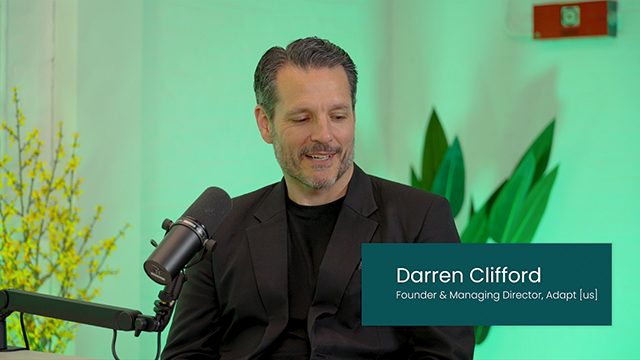
But it is challenging because there's not a signed budgets. You have to make a very clear case. We had a really interesting episode with Darren from Adapt [us] Capital. They're focused on adaptation solutions. And during that episode, he, talked a lot about how there has to be this business case.
But one of the challenges is that if I'm a, a CEO of a large corporation, and I'm thinking about the benefit to investing in adaptation over time, one of, one of the challenges is that it shows up just as a negative on my, short term balance sheet. Yeah. So I therefore looks like I'm making, a substantial loss.
Yeah. Maybe I lose my job. It's, it goes against I think, sometimes what is in people's personal incentive to do. Having said that, I understand that, coming from your perspective as a venture capitalist, you're looking for those solutions that have that really easy, smooth business case.
You don't have to do loads of education in the market to try and sell. 'cause if something's more efficient or it's cheaper, in some ways, everything else doesn't matter. That's the case, right?
Declan McEvilly: Yeah. We want these businesses we're investing into, to stand alongside the next best business in AI or SaaS or defence or whatever VC sector's doing well.
We should be backing climate businesses that have the ability, ultimately we are beholden to our underlying investors.
So that's that, that is ultimately where the bar stops. We were bitten a little bit by those voluntary contribution businesses and that's something that we've now become a bit more militant on.
I keep using this term efficiency just 'cause it seems to keep, it seems to spring up in our portfolio time and time again. Now that's not our entire portfolio. We are a very broad climate investor. Adaptation is something that we are that, that we're really excited by at, in as an investment sub-sector.
What else is, trying to think of other sub-sectors that are hot at the moment. Grid transition is a good example where. Global power grids were never set up and designed to deliver renewable energy. They were set up and designed to deliver coal and global power grids are struggling to match the supply of renewables with a demand for energy.
So power grids need to change and there's a lot of fantastic tech out there that is helping that transition. Now, does that business fit directly in a nice little box to my efficiency analysis? It probably doesn't, but it's such a vitally important problem with a huge market market opportunity that is also something we're interested in.
Climate adaptation is another one. So we're seeing some fantastic technology coming out at the moment around the world is changing. We're seeing it here in the uk. It's bloody hot. We all know this. There is more demand for cooling. There are in greater flood risks. Something needs to be done about that.
So there are businesses out there that are looking to solve those problems. We invest in a great business called Verv, which is improving the efficiency of air conditioning units. So global cooling accounts for about 10% of power usage. That number is only set to go up. So cooling again is a sector; flood risk is a sector; anything around adaptation.
So there are some really exciting, I call them newer type sub-sectors, but ultimately, yeah, if I had to explain it in one line, it would be that efficiency angle.
Katherine Keddie: Yeah. I think the efficiency angle is the strong place to start. It's much easier for you to be able to raise capital and deploy on that basis.
'cause it Yeah. Aligns itself very naturally with market economics.
Declan McEvilly: We are seeing less demand for sustainable investors. Listed funds haven't helped that people are a bit shy on investing into sustainable businesses. So we need to ensure that we are not just attracting capital from sustainable investors.
We want to attract capital from every investor. So to do that, we not only need to talk about how fantastically sustainable these businesses are, but also the business case that stands behind 'em. And that, that really is at the heart of what we're doing. What we're trying to do is paint a story to our investors that you can have your cake and eat it.
You can have a positive environmental impact. You can help support some fantastic businesses that will make a difference, but also you shouldn't have to sacrifice returns to do so.
Katherine Keddie: Yeah. It's a co benefit to the goal.
Declan McEvilly: I like to think so. Yeah.
Katherine Keddie: Yeah. Yeah. Something we haven't talked about, but you touched on earlier, you said something like the UK's has all of these great incentives Yeah.
For like early stage like tax incentives for investment. What do you think of the UK startup infrastructure. Yeah. Do you think the UK is a good place to start and then also scale a business?
UK startup infrastructure and the scale-up cliff edge
Declan McEvilly: Two very good questions there that are two different questions. I believe that the UK's a fantastic place to start a business.
The government for all, for all their wisdom, they have implemented a structure of enabling startup capital to mobilise private businesses in the uk. And they've done it so well with the EIS, SEIS, VCTs, all these different structures that we have mobilised capital to get where they need to go.
The UK raises. So last year in 2025, the UK raised the most VC out of mainland Europe by quite a way. London was obviously a hub for that. So the UK punches way above its weight in terms of startup and I think it's something we should be really proud of as, as a country that we do incentivise and allow innovation to flourish.
I think that's a fantastic thing. We've got a fantastic university system as well that again, helps support spin outs as well. So those things coupled together and you've got capital, you've got university, you've got great innovation. Yeah. The UK's a fantastic place to start a business and to raise capital.
Do I think we could do a better job of scaling those businesses? Yeah, I do.
Katherine Keddie: The classic complaint in the ecosystem right, is that we have all of this amazing innovation happening, particularly through the universities, but also, just generally through the startup ecosystem. And then they will get to a certain point and then they all need to raise money and they go elsewhere.
Yep. Particularly to the us. What do you think the UK could do differently to avoid that happening?
Declan McEvilly: It's a really difficult one. It's something I've been thinking about because saw your questions beforehand. The US has a very different risk profile approach to VC than the UK does. We are never gonna be able to compete with the VC on value with the VC valuations in the US and the uk.
We're just not set up for that. Our, the nation isn't as risk prone. The US loves VC. You are, if you are able to certainly in the short to medium term, you are gonna get a better valuation in the US than you will in the uk. That comes with its own issues. That comes with its own challenges.
Some of our portfolio have gone on to do that successfully, which is fantastic. It's very difficult. It takes a lot of time, it takes a lot of resource, takes a lot of energy. You don't always, get that golden egg. So do I think that we're gonna be able to match the US anytime soon? Probably not to be honest, but we can close the gap.
Certainly. The British government has tried really hard with various different incentives to mobilise scale-up capital. So we've had the Mansion House Review, which is trying to mobilise pension capital into startups. The British Business Bank also has various different incentives to stimulate capital on that scale-up journey.
Now again, we've got this double-edged sword here, right? So on one end of the scale, we've got these fantastic schemes that are channelling money into startups. Fantastic. A lot of these businesses probably wouldn't get funded without these schemes. These schemes do provide a real necessity in the ecosystem.
However, once those schemes then fall away, there will be a cliff edge until they're then picked up by scale up funds. That's the double-edged sword of having these really good startup vehicles.
Katherine Keddie: Interesting. So thinking about the companies that are within your portfolio, and obviously they're at different points in a scaling journey, have any of the companies that you worked with found a lot of success using Scaleup capital from the us for example?
Raising in the US and the valuation trap
Declan McEvilly: There, there are a handful. It's difficult. It's not an easy thing to go out there, especially when you have connections deeply rooted in the UK to then pick up your fundraising process and move it over to the US is incredibly difficult.
We've had a couple, I would say that have had success going early. And they've done very well there. I think there are probably a few businesses in our portfolio that are beginning to mature to a point where they're either starting to look to mainland Europe for larger raises or alternatively to the us.
Yeah it's difficult. With the US you, you typically go there because you want a higher valuation. It's typically what drives a fundraiser in the US and an increased check size, relentlessly competitive. Very difficult. We've seen on the flip side of that, some businesses that have raised in the US and something that we talk about a little bit with our businesses is you can become a little bit of a victim of your own success to your valuation that you last raised out.
So getting a great high valuation might be fantastic, but if you miss targets or you miss revenue or whatever happens in 12, 18 months, two years time, and you go back to raise again, if you're not able to go back to that same pool and you do have that really high valuation, that can be really difficult.
And we've seen some businesses struggle to do that. So I would say, that golden goose of raising in the US with a high valuation, it's great. But there are, and this is something we speak to our portfolio about, there are, there's the flip side to be considered here. I don't think the best thing always to do is to get the absolute maximum value of your valuation that can come with downsides.
Katherine Keddie: So if, what type of company do you think would fit that really ambitious, let's go abroad to the US. Raise the biggest valuation we can, like in what context or what type of business do you think that would be an appropriate move?
Declan McEvilly: It would be a business that's really hit that up upward hockey stick quite early.
And they and they've got that proof of concept and they've starting to get revenue coming in. They've starting to get interest from big corporate clients that they have a real clear trajectory to a lot of revenue. Again, it's a lot of valuation at the minute is being driven by, by, by validation.
So if you can have some form of validation, there's various different indicators that, that can do that, that, revenue is the ultimate one. So a business that has that is ahead of plan is raising, is generating, sorry, large amounts of revenue that would be a, maybe an indicator to get out to the US potentially.
That there are lots of hurdles that you can jump through in the uk. You can go from raising a 250,000 pounds seed, SEIS round up to, 20, 30, 40, 50 million pound round quite happily in the UK outside of that. Yeah. Then you might look to mainland Europe or the us but yeah, there, there's a lot of headroom that you can go after in the UK first.
Katherine Keddie: Interesting. Do, would you say that there's there's hype in the startup up ecosystem that says, yeah, go to Silicon Valley, it's place
Declan McEvilly: to you? Yeah, a hundred percent. Yeah, a hundred percent there is, yeah. A lot of founders, I think can potentially, look, valuation is so important. It's very important.
It's not the only important thing though. And we've seen some va, some founders get obsessed by the valuation sticker that they get. There's a lot of things to consider in that valuation. So I wouldn't live and die by your valuation number. So there is hype. It is important. It's not the only, it's not the only important thing.
I think within climate tech as well, coming back to what we were talking about earlier, a lot of the businesses that we like to back their hardware, their manufacturing, their physical, the time it takes to scale up those businesses is longer than a SaaS business. So having those stepping stones and not having to do a huge giant leap, you're probably unlikely to get that with a traditional manufacturing startup.
Whereas you might, with a SaaS platform that, overnight raises millions and has millions of revenue or whatever, you're not gonna get that with a manufacturing type business. Now it's good and bad from that. That's not a good thing or a bad thing. They're just different business models.
Yeah I, an AI business is able to prove validation if it can get revenue in quicker than a manufacturing business, I would say.
Katherine Keddie: I guess that comes back to your point about your value driver, which is for investors around having a diversified portfolio. So you are more on the side of the manufacturing business that maybe is a little bit slower to scale, but perhaps valuation is more cemented in the reality of the business in a way that's, easier for people to trust and support.
Declan McEvilly: Absolutely. Something I've noticed within our own portfolio, and I probably say the wider climate tech portfolio since we moved into this efficiency era rather than voluntary contribution, is that the businesses tend to be a bit more defensible. So they tend to weather the storm a little bit better than potentially some other areas.
Their burn rates aren't as high. They don't need teams of 50 software developers, they, they just don't need that sort of thing typically within the portfolio. Now there are some that are that way inclined, but typically manufacturing business, the, they scale up their cost base is very incremental.
Oftentimes they are linked in with long term, long-term contracts as well. So the, the revenue is a bit more predictable now. They can weather the storm a bit better, potentially, but again, then you might not get that massive hockey stick trajectory. So again it's just different. And I think that's something that's important, when analysing a wider portfolio, it's just having that diversity.
I know, AI is obviously the hype of the day. It has been for a few years. Something else will come along. There's already people talking about an AI bubble. There are great businesses that have been built. It's absolutely instrumental. As we all know. A lot of those businesses, their burn rates are very high.
So it's horses for courses.
Katherine Keddie: Yeah. We'll see it, it's a, it is an exciting time to be in bc that's for sure.
Declan McEvilly: It is. Yeah.
Katherine Keddie: Let's talk a little bit about pitching and framing. So I'm thinking specifically for listeners who are founders of companies who are trying to raise money. Yeah. What do you think makes a good pitch?
What makes a good pitch: problem, solution, traction
Declan McEvilly: Such a good question. What I slash we like to see is a real clear problem solution, slide on the deck. Tell me what the market problem is, then tell me how you're gonna fix that. That I would lobby founders to start there with the pitch. That is the basis of your storytelling and fundraising and sales is, as we know, is all storytelling.
What the problem is and how you're gonna solve that problem. That is the core of your of the story right there. That should do a lot of heavy lifting for you. So really bring that story out of what the problem is. 'cause that will then delve into the market size that will delve into what solutions already exist there.
And then the solution to that problem. You can really shine the light on what you've developed and what you've what you've built.
Katherine Keddie: So a, a good understanding of what the problems the customers are facing actually are. One problem that I see all the time in, in our work is companies that have amazing technologies, like completely game changing technologies and therefore, a view that the technology will speak for itself.
Declan McEvilly: Yeah.
Katherine Keddie: And I would imagine especially, you work in lots of different sectors what you need is real traction. Like I understand the product market fit here. Yeah. And I understand the technology in a very simple way because you're not necessarily an expert in, a specific type of cooling, for example.
Declan McEvilly: Absolutely. Yeah. It's something we see time, and I'm sure you do as well time and time again where a founder sometimes maybe gets a little bit lost in the weeds of their own fantastic technology, and I'm sure it is fantastic. Tell me who's buying the thing if the simpler that can be why, who's buying it and why they're buying it.
That really fits into the validation to use your term there. Yeah.
Katherine Keddie: Yeah. Interesting. And when you are looking at maybe not in a pitch deck specifically, but when you're assessing a company
Declan McEvilly: Yeah.
Katherine Keddie: I would consider things like really effective customer interviews, the right storytelling to be within the category of marketing communications.
There are obviously many other elements like the sorts of activities they're doing to get it in front of people, how it works all the way down to the sales cycle the steps that are being taken there, the materials they've developed, the story, the brand, that kind of thing. How does that play a factor in the decisions that you're making as an investor?
Declan McEvilly: Massively, it does. We. As a somewhat more militant investor in the space of climate. We want to see return. We want to deliver returns to our clients. How, where the revenue's coming from, how you're gonna get it, what are your clients, what does your segmentation look like? That part of the due diligence is super important.
We refer to that as traction in any general term. Some businesses don't have revenue. That's fine. You are in our pre-seed fund. But what we want to see is, have you started talking to customers or clients? How far along have those journeys gone? What does your pipeline for conversations look like?
Now? What a revenue producing business we wanna see. We wanna get more into the depths of what those specific revenue lines are. Something we do as a, as part of our due diligence, we like to call up your customers as a founder.
So we would spend a decent amount of time in the due diligence, picking up the phone, speaking to the founder and saying, who's your best client?
We would like to speak to them. That then gives us the ability to really understand why the client is buying the thing.
Again, it's all validation. Also, what we like to understand is how sticky that revenue is. How embedded that technology is into the future plans of the business. And we can make a decision based on that.
So yeah, sales pipeline revenue acquisition, client segmentation, client engagement. That's all really important. Again, that all comes under, we refer to that as traction. So a slide, again, not to keep bringing it back to the pitch deck, but a slide on traction in whatever form that is. If you are revenue producing, it's revenue, if you're not revenue producing tell us who you are speaking to.
Have you started speaking to them yet? How have those conversations gone? What do clients like and not like? What's causing those clients problems? But make it real. Every, everyone's got a slide in the pitch deck. Every founder's got a slide on what the revenue projections look like over the next 10 years.
I've yet to see a business that actually hits those revenue projections. So that's not what I mean by traction. Don't tell me what you're gonna do. Tell me what you've previously done or what you're doing in a moment.
Katherine Keddie: Okay. So for example, it's much more interesting to you for someone to say, we have these pilots running with these clients.
We have these further agreements. At a later stage, we have these MOUs with these potential big customers, rather than say, TAM, SAM.
Declan McEvilly: That is really important. But to me, that comes on the, the market problem slide.
Katherine Keddie: Sure.
Declan McEvilly: The market problem is this, the addressable market for that problem?
Is this, that that's great. That's part of the story. That's what makes the business interesting. That's what makes the business exciting and sexy. But that's not your traction.
Katherine Keddie: Yep.
Declan McEvilly: That's the market's traction.
Katherine Keddie: Okay.
Declan McEvilly: You are not the market.
Katherine Keddie: Yeah. Yeah. So it may be a better comparison would be that real traction versus, like you say, the, in 10 years we'll be making this much money.
We'll be doing this and that, because that realistically that will change. Yeah.
Declan McEvilly: Projections are super important, but especially the stage we can involved at. Those financial models, they're, they're really difficult to predict. If we could all predict what our revenues would be over the next five years, we'd all live very happily.
That's not the reality. So what we wanna see is what, what steps you, what steps are you making for client acquisition today or have you made in the past three months or whatever.
Katherine Keddie: Interesting. And then how are you looking at how they will further acquire, customers in the future? What does that look like for you?
Declan McEvilly: Yeah, absolutely. Who's doing the sales, what does the sales team look like, what's the sales process? I really, we don't want, we want to get off a call with a good understanding that the founder or the revenue director, whoever it is, has got a really solid understanding of how the market drivers work for each of their different client base.
We wanna come off the call with a real confidence that we know that they will be able to get to revenue, or at least that they've got a plan in place to achieve that.
Katherine Keddie: Interesting. Okay. So this sort of marketing commercial sales focus is a substantial part of your due diligence and what you'd like to see on the deck.
Declan McEvilly: Yeah. So traction, I think is a,
Katherine Keddie: yeah.
Declan McEvilly: Market problem. Your solution, the traction of the business. They're yeah, they're the three slides that we'd probably spend the most amount of time on.
Katherine Keddie: And then what else are you looking at in that context?
Declan McEvilly: So a bug bear that I have no end of, is that there's no slide on the raise details, so please put those in.
Please tell me how much you're raising, please tell me why you're raising that much. Please tell me how much of the round you've got tied up. Who else is co-investing? Who's the lead? Do you have a lead? If you have a valuation, great. What is that valuation? So all of that kind of stuff that is almost sometimes the first thing that we'll look at, because if that isn't relevant, and it might be nothing to do with your business, it might just be that we are not the right investor for you, we're wasting everyone's time.
Yeah, mark raise slide as well, please.
Katherine Keddie: And for just to hammer at home for those listening, how long on average would you say you spend looking at a pitch deck and it's the first time? Yeah. First instance of looking at this pitch deck.
Declan McEvilly: Yeah. It's probably somewhere between it's five to 10 minutes max.
It's, it's, maybe that's
Katherine Keddie: higher than I
Declan McEvilly: thought. It's probably less than that. It's probably, four or five minutes. It depends how good the deck is.
Katherine Keddie: Sure.
Declan McEvilly: If the deck is bad, it's, it might be an open shut and, which is so unfortunate, because there might be a great business under there, but yeah, so that's why market problem, your solution, what's your traction raised details.
We don't need it. Have an initial outreach deck with eight slides.
Have a follow up deck with 25 slides or 30 slides. Don't send 40 slides on a cold outreach or an initial approach. No one's gonna read it.
Katherine Keddie: I think sometimes with these things we actually forget to use, like the, the common sense of, as an individual myself, I'm not reading a 40 slide deck on a cold email for anything, like realistically.
And also again as a human, when I open the cold deck, if it's not engaging, it doesn't immediately tell me what I need to know. Then again, I'm gonna close that immediately because I'm sure you are inundated with people reaching out and looking for funding. Making it very easy for you to say yes.
I think sometimes people get in their own way when it comes to communicating something that could be super effective.
Declan McEvilly: Definitely. And, if you are a founder and you've developed the, some new amazing technology that the world's not seen before, you're gonna wanna talk about that. I totally understand it, but in the context of the ride, wider round coming together, that is, but one part of that.
And to be honest, candidly speaking, where we start is on the raised details, how much are you raising? Who else is in the round? All of those kind of things. Because if you are gonna, if you are telling me that you are raising 50 million pounds, we are not the investor for
Again, do homework on who you're reaching out.
I know that raising is difficult for a founder. I know it's a lot of knocking on doors. I know it's hard work, but save yourself time and just work out whether this investor is right for you. So the amount of decks that we see by businesses that are not based in the uk, we have to be in the UK businesses that are raising 40 million pounds, we are doing, a million pound tickets businesses that aren't EIS or SEIS qualifying, you know, tell me those things upfront.
Tell me that you are an EIS qualifying business. You are solving this problem and we are raising 500 K and we've got a hundred K left. Something like, whatever those numbers are that then will make me open the deck.
Katherine Keddie: Interesting. And that would be in the email, the cold email that they're sending to you?
Or that's
Declan McEvilly: the
Katherine Keddie: end of the deck.
Declan McEvilly: So I guess the, if I'm thinking back to the outreaches that have, where we've actually invested, and these have been cold outreaches, founders ping me on LinkedIn, Hey, I see that you've done this. We are raising this. We've got X amount left. Here's the deck. Follow up with me a few times we write a ticket.
So make it as easy for us as possible for investors as possible. I know it's a pain, sent from a founder's perspective, sending all of these hundreds and hundreds, if not thousands of cold emails, raising money's difficult. VCs see a lot of decks. There's a lot of people fighting for capital.
So make it easy as possible. You know what a good approach looks like is we are raising a million quid. We've actually got 700 grand of that tied up. The round is coming together. Do you wanna slice?
That, that's an attractive story. Now it's not to say that, we can be the first ticket we can lead, that's also fine.
But it's a, I'm saying what, just think off the top of my head, what, what's worked well recently a founder in my inbox. We've got this much left. This is what the business does. Are you interested? A couple of calls later, we wrote a ticket.
Katherine Keddie: Yeah, completely. And I think especially if they are, they're already speaking to investors that, 'cause obviously you'll be very integrated into the community.
Yeah. You'll co-invest with other investors. I think showing that they have traction from people that, respect and trust is also a very valuable tool. It's very similar to how people will say reach out to, customers called outreach. And then one of the most effective ways to do that is to say, we've worked with someone that you know and trust and they've given us that testimonial.
That's always gonna be way more convincing than that person saying, trust me. Like we're fantastic. Everyone
Declan McEvilly: wants a third market, third party validation. That's it, right?
Katherine Keddie: Yeah. And no one wants to be first. There's the
Declan McEvilly: problem. Exactly. Yeah. So something that's really important for us, for our investors is that we don't want to go into an underfunded round.
So if you need a million pounds to get you to the next 12 months and we are writing a couple hundred thousand pounds or whatever it might be, that's a risk to us and to our investors. So we need to make sure that the round that you, the investment that you've managed to curate together is going to get you to the point of next validation, next client acquisition, next raise cycle.
Otherwise, we're not doing right by our investors. Yeah. Tell me and if you don't have investors, tell me again, talking about that sales cycle, how you're going to acquire them. Who are you talking to? Who have you spoken to?
Who's interested, who's in due diligence? Who's the IC stage? So again the fundraise for a founder is very similar to the sales cycle for your business. Treat 'em the same.
Katherine Keddie: Yeah. Yeah. I think particularly for businesses that have a few focused potential customers. Yeah. So most of the businesses that we work with have very focused customers.
Like we, we work with a couple of companies, for example, where they're trying to reach five customers in the world as their primary, ideal customer profile. And I think, with investment, obviously sometimes rounds can be made up in many different ways. Yeah. But often you are focused on, building relationships with specific people over time.
And then having that approach that, that supports, relationship building, making sure that your outreach is very high quality, that it's tailored to that specific person. Like, all of these things are applicable to both scenarios.
Declan McEvilly: Absolutely. So I think one of the best things that a founder can, one of the best skills that a founder can learn is how to tell the story of that will help sales from clients.
It will also help with fundraise. Get good at talking about your company. Get good at telling the story of your company. If you can't succinctly explain what your business does, investors are gonna struggle to understand it.
Katherine Keddie: Yeah. We've forced people to do the five-year-old test. Yeah.
As a kind of initial introduction into the first discovery meeting when we do messaging projects.
Declan McEvilly: Mine look might look terrible now. So I'm sadly giving all this advice, and actually I should eat my own words.
Katherine Keddie: I think, you know what, I think everyone can always improve on storytelling.
Yeah. I think it's one of those like crucial skills that apply to, what whatever you're doing in life Yeah. It's one of those skills that comes with it. I think all, all a work in progress when it comes to that. We've talked a lot about mo what makes a good pitch. Yeah. What makes a bad pitch in your opinion.
Declan McEvilly: Yeah. So it's gonna be the inverse of that. Getting way too technical too early.
Katherine Keddie: Yeah.
Declan McEvilly: We will get to that, but that's not why we're initially interested. We don't need to be going into the, your patent details on date one. Way too technical, way too hyper-focused.
A very complicated business model as well. Some businesses need that, but it, anything that causes confusion or misdirect in that initial conversation is harmful to your pitch as a founder. Keep it simple. So too technical, complex business model, going over complex financial projections.
Don't do that. And again, not having the raised details.
Katherine Keddie: Yeah. So maybe skipping to the detail without telling you, we are raising this much and therefore it's relevant to you.
Declan McEvilly: Yeah,
Katherine Keddie: yeah. Interesting. What about look and feel of a deck? So if you open it and it looks like something made on Paint in 2000, is that gonna turn you off?
Or you are like, you know what, there's still something valuable here. I'm gonna still read through it.
Deck design and first impressions
Declan McEvilly: Yeah, that's a good question. I would love to say that we rise above it, but I think human beings, there's, there is something about a nice deck that, it gives an aura of professionalism and that you are actually taking the, now that might not be true, and that might be unfounded, but I think there is, that's the vibe that a professional looking deck gives yeah.
Katherine Keddie: I'm sure I've said it on this podcast before, but we always talk about it at Adopter, like it's as if you're going to a job interview or to a pitch and you're wearing a suit that has loads of holes in Yeah.
And stains down the front, and you've clearly spilt your coffee everywhere. It's not that you, what you're saying is not super valuable, but it does make a negative first impression. Yeah. That's good. Like we are humans and unfortunately people can be, quick to judge and I think it's doing you a disservice really, because I'm sure that what you are trying to pitch is super valuable.
So just, don't spill the coffee and
Declan McEvilly: that's good.
Katherine Keddie: Let it shine through. It's a
Declan McEvilly: good comparison. Yeah. You are in, in, you are in an interview saying all the right things, but yeah, you dress terribly. That's a good comparison.
Katherine Keddie: So if you were to summarise your advice on the type of deck and the type of pitch and the type of presentation you would like to receive, what would you, what would that like one line summary be?
Declan McEvilly: That's a difficult one. I'm gonna go with be a storyteller.
Katherine Keddie: I love that.
Declan McEvilly: Tell the story. Let the business and the sector do the heavy lifting for you.
Katherine Keddie: Yeah. Amazing. Okay. Fantastic.
So obviously, your job involves a lot of storytelling on behalf of OnePlanetCapital. You're a co-founder, you've been doing this for a long time, you've been raising yourself. What role does content, thought leadership, that kind of storytelling work, play in building trust with your investor community?
Content, thought leadership, and selling trust
Declan McEvilly: Yeah, it's pivotal. Trust is a word there that you brought up, but it's something that I said to the team not that long ago we're, we are not here to send investments. We're selling trust. Investors back founders. They back funds because they believe and they trust the individual that they're placing their money with.
It's it, and it's really important that we build that trust and it's really important we to do that in the right way and that we come across professional and all the rest of it. So thought leadership, content, wider marketing, all of those piece together harmoniously to build trust in us as individuals, trust in us, in our investments, trust in OnePlanetCapital is the brand so that all that jigsaw all sort of fits together to ideally and hopefully build trust in a market.
Katherine Keddie: Okay. Nice. And I know that you, for example, do some posting on your personal LinkedIn, your website. Like what, what works well for you in terms of your own marketing and outreach?
Declan McEvilly: Yeah, what works well? That's a good question.
We've had some good success with bespoke landing pages. So if there's, prospects that we specifically want to talk to we will build a bespoke landing page on why they should engage with us. So it's all about that Climate sec client segmentation. Every quarter we will look at our client bank and say, who are the biggest investors that we wanna speak to?
We'll pick five or 10 of those and we'll do some specific work, bespoke work for those. Then as you filter down the list, we get more into, your traditional marketing stuff, your newsletters, your LinkedIn postings and video content, making sure the website looks clean and professional. So yeah, it's about doing the basics and I refer to the basics as newsletter, emails, calls, all that kind of thing.
We're, we've had some success with that, more bespoke approach to those key clients that we really want to speak to.
Katherine Keddie: Okay. Amazing. Unfortunately we are like coming to the end of our time, which is sad because I think this has been really interesting. Couple of wrap up questions for you. The first is, give us one industry or area of innovation that you think is most exciting right now in climate tech.
Climate adaptation and grid transition as growth sub-sectors
Declan McEvilly: Can I give you two?
Katherine Keddie: Yes.
Declan McEvilly: Great. So I think climate adaptation is really interesting sector. It's something that we spoke about a little bit earlier, but the world is changing. Unfortunately a huge part of that is likely down to carbon emissions. The planet is heating up as a result of that.
There is increased demand for cooling, which creates opportunity. There is increased flood risk, which needs addressing and solving. So that whole sub-sector around climate adaptation and how do we best play the hand that we've dealt for better or worse o over here, on one hand we can try and reduce carbon and improve the environment, but we are now seeing some businesses that are standing up and saying, there's a problem here.
We need to help solve it. So that's a really exciting subsector for us at the moment. And there's some really core businesses in that space. We recently invested into a business called SmartResilience. They are doing climate mapping using ai. So they're working with large scale corporates mapping where the risk is globally for their supply chain, but also their physical presence in the UK and where the flood risk is helping them take preventative measures against that.
So there's less downtime but also then forward planning saying where are we gonna pop up our physical presence where there is least flood risk? So obviously that's got some strategic value, but actually also that helps with insurance premiums. So they get lower insurance premiums as a result of being able to evidence that they're doing this forward flood planning.
So again, going back all the way back to that efficiency. By implementing that business, a corporate can point to reduced insurance premiums. So it helps, justify that business.
Katherine Keddie: Interesting. So quite, quite a clear adaptation case there.
Declan McEvilly: Yeah. So adaptation is really exciting.
And the other one is grid transition.
Again, I mentioned it earlier, but the, the situation that we're in is that global power grids were set up and designed to deliver a stable source of fuel coal. They're very good at doing that. What they're not good at doing is delivering a volatile source or a more yeah, more variable supply of electricity.
So we, the, the current UK power grid is inefficient at delivering the difference between supply and demand that needs to change. The grid needs to adapt, it needs new technology. Part of that will be around battery storage and and battery transition to allow the better holding and storing of electricity and then delivering it where it needs be.
So that's one element. Another element is getting the grid better at coupling up local supply and local demand of energy. So instead of having to deliver wind turbine generation from Scotland down to London, they're delivering it more locally, there's less time it being transferred, et cetera, et cetera.
So local power generation anything around batteries and generally anything can improve in the grid of sectors that we're quite excited about.
Katherine Keddie: Yeah, it is such an exciting sector. We've actually had quite a few guests who've mentioned that as being a focus area. And we have for those listening, we have a full episode from Paul Domjan, founder of ENODA, that are focused on solving these issues with the grid.
Super interesting. Okay, so adaptation and grid issues are the two things to watch. Yeah. Okay.
Declan McEvilly: As of today, they're the two ones that we're interested in.
Katherine Keddie: Okay. We can check back in a year and see how those have done. Okay. Perfect. And is there anything else that you wanna flag about the company, the organisation?
Where can people find you? Have you've got anything exciting coming up that you wanna mention to the audience?
Declan McEvilly: Where can people find us? At one Planet? OnePlanetCapital ? Yeah. Our website. So if you are a founder, you are UK based, you are raising EIS or SEIS in the climate technology space, come find us.
We want to speak to you. Alternatively, if this resonates with you from a personal perspective and you are interested in backing the next generation of climate solutions and you want some tax relief while to doing so, then also we would love to speak to you as an investor.
Katherine Keddie: Okay. Amazing. Thank you so much.
This was absolutely fascinating. Good. We'll include all the links in the show notes for everyone to be able to learn more about you, reach out to you on LinkedIn using the, the, the very kind blueprint that you gave for effective outreach. And for everyone else, thank you so much for listening.
And join us on the next episode of Scaling Green-Tech. Goodbye.











.png)





.jpeg)

.avif)